
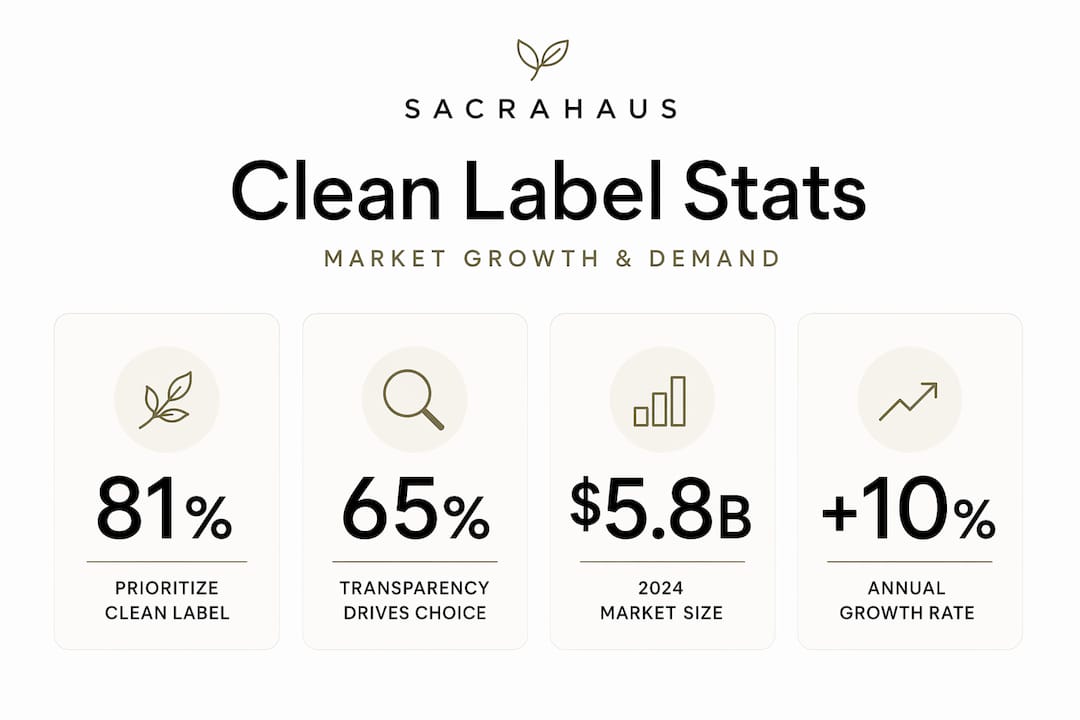
Over 81% of shoppers now prioritize clean label products and are willing to pay a premium for transparent, ethical, and recognizable ingredients. Yet most people reaching for a supplement bottle have no clear idea what "clean label" actually means, or whether the claim on the front panel reflects anything real on the back. The wellness space is flooded with buzzwords, and clean label has become one of the most repeated and least understood of them all. This article cuts through the noise, defines what clean label actually means in the supplement world, and shows you how to use that knowledge to build a holistic wellness routine grounded in real transparency.
Table of Contents
- What is a clean label in supplements?
- Why clean label supplements are in demand
- What makes a supplement truly clean: Certifications and transparency
- Challenges, controversies, and critical nuances of clean label supplements
- Integrating clean label supplements into holistic wellness routines
- The uncomfortable truth few discuss about clean labels
- Explore trusted clean label supplements at SACRAHAUS
- Frequently asked questions
Key Takeaways
| Point | Details |
|---|---|
| Clean label lacks official standard | Clean label is currently defined by consumer preference and marketing, not government regulation or scientific benchmarks. |
| Trust drives demand | Consumers prioritize transparency and are willing to pay more for supplements with clean labels and ethical sourcing. |
| Certifications matter | Third-party certifications like NSF and USP are key signals for purity, safety, and transparency in clean label supplements. |
| Manufacturing trade-offs exist | Natural ingredients and clean label processes can create challenges in manufacturing, affecting cost and product performance. |
| Holistic integration is achievable | Clean label supplements can be effectively integrated into wellness routines with careful attention to sourcing and certification. |
What is a clean label in supplements?
The term "clean label" gets used constantly in wellness marketing, but it is not a legal definition or a regulated standard. It is a consumer-driven concept, shaped by what shoppers want to see, and what they want to avoid, when they flip a bottle over and read the ingredient list.
At its core, clean label supplements emphasize simple, recognizable ingredients and the deliberate absence of artificial additives, fillers, and preservatives. They often include ethical sourcing commitments and third-party certifications to back up their transparency claims. The idea is that you should be able to read every ingredient and know exactly what it is and why it is there.
Critically, no official regulatory definition for "clean label" exists from the FDA or any other governing body. It is a marketing term governed by general truthful labeling rules under DSHEA (the Dietary Supplement Health and Education Act of 1994). That means any brand can technically use the phrase, which is exactly why understanding what to look for matters so much.
Here is what clean label typically means in practice for supplements:
- No artificial colors, flavors, or sweeteners
- No synthetic preservatives or unnecessary fillers
- Non-GMO ingredients
- Gluten-free formulation
- Ethically sourced botanicals and adaptogens
- Third-party tested for purity and potency
- Minimal processing to preserve ingredient integrity
Browsing vegan vitamin supplements that check these boxes is a good starting point for seeing what genuine clean label looks like in product form. The difference between a clean label supplement and a conventional one often comes down to what is not listed as much as what is.
Why clean label supplements are in demand
Clean label is not a passing trend. The data behind it reflects a fundamental shift in how health-conscious consumers relate to the products they put in their bodies. Trust is the central driver. When you cannot see inside a manufacturing facility or verify sourcing claims independently, a clean label with third-party verification becomes your most reliable signal of quality.
"Transparency is no longer a bonus feature. For today's wellness consumer, it is the baseline expectation."
The numbers support this shift decisively. Consumer demand data shows that 65% of shoppers are directly influenced by free-from additive claims, 81% consider clean label important, and a significant portion are willing to pay more for it. That is not a niche preference. That is a market-wide realignment.
| Metric | Value |
|---|---|
| Clean label supplements market size (2024) | $5.8 billion |
| Projected market size (2033) | $13.6 billion |
| Compound annual growth rate | 9.8% |
| Clean label ingredients market (2024) | $54.41 billion |
| Projected ingredients market (2032) | $92.79 billion |
| Ingredients market CAGR | 6.9% |

Source: Clean label supplements market
These figures tell a clear story. The clean label supplements market is growing at nearly 10% annually, which outpaces most conventional supplement categories. Consumers are not just asking for clean labels, they are spending money on them consistently and in increasing volumes.
For those integrating supplements into a holistic lifestyle, the appeal goes deeper than ingredient lists. Exploring wellness collections built around intentions like sleep, energy, and immunity shows how clean label products fit naturally into ritual-based routines. Similarly, for people focused on skin health, clean label formulas reduce the risk of reactive ingredients that can undermine what you are trying to achieve topically and internally.
What makes clean label align so naturally with holistic wellness is that both philosophies share the same foundation: respect for the body, trust in natural systems, and a preference for what has been used and understood for generations rather than synthesized in a lab last decade.
What makes a supplement truly clean: Certifications and transparency
Since "clean label" is not legally defined, certifications become the most reliable way to verify that a product actually meets the standards it claims. Not all certifications are equal, and knowing the difference helps you make faster, smarter choices at the shelf or on a product page.
Here is a comparison of the most meaningful certifications in the clean label supplement space:
| Certification | What it tests | Who it benefits most |
|---|---|---|
| NSF Certified for Sport | 290+ banned substances, label accuracy, contaminants | Athletes, performance-focused users |
| Clean Label Project | Purity, heavy metals, pesticides, toxins | General wellness consumers |
| USP Verified | Ingredient identity, potency, purity, dissolution | Anyone seeking pharmaceutical-grade accuracy |
| Non-GMO Project Verified | Absence of genetically modified organisms | Consumers prioritizing natural sourcing |
| USDA Organic | Farming and processing standards | Those focused on pesticide-free ingredients |
Third-party certifications like NSF Certified for Sport test for over 290 banned substances, verify label accuracy, and screen for contaminants. The Clean Label Project focuses on purity and toxin levels. USP verification checks ingredient identity and potency. Each one adds a layer of accountability that self-reported claims simply cannot match.
Here is a practical process for evaluating clean label credentials before you buy:
- Check for a third-party seal on the label or product page, not just a brand claim.
- Verify the certification by searching the certifying body's public database.
- Read the full ingredient list, not just the highlighted ones on the front panel.
- Look for sourcing transparency, including where key botanicals or adaptogens originate.
- Confirm manufacturing standards, such as cGMP (current Good Manufacturing Practice) compliance.
Pro Tip: If you are an athlete or take supplements that could be tested in competition, NSF Certified for Sport is the only certification that directly addresses banned substance screening. Do not assume that "natural" or "clean" automatically means competition-safe.
Understanding how sourcing and formulation decisions are made gives you a clearer picture of what genuine transparency looks like behind the label. Brands that share their process openly are giving you something certifications alone cannot: context. The clean wellness philosophy behind a brand shapes every ingredient decision, which is why values alignment matters as much as any single certification.
Challenges, controversies, and critical nuances of clean label supplements
Clean label is a powerful idea, but it is not without real complications. Understanding the challenges helps you evaluate products with a sharper eye and avoid being misled by marketing that uses clean language without clean substance.
Manufacturing clean label supplements introduces genuine difficulties around flow, stability, and shelf life. Synthetic excipients (inactive ingredients that help with processing) are often replaced with natural alternatives that do not perform as consistently. This can affect how a capsule fills, how a powder mixes, or how long a product remains stable on a shelf. Higher ingredient costs and sourcing variability add further pressure, especially for smaller brands trying to maintain clean standards at scale.
There is also a more subtle controversy worth knowing. Clean label claims can mislead when a "natural" substitute performs the same function as the synthetic ingredient it replaced, effectively doing the same job under a cleaner name. Yeast extract, for example, acts as a flavor enhancer in much the same way monosodium glutamate does, but it reads as more natural on a label. The absence of a synthetic ingredient does not automatically mean the product is more beneficial or more honest.
Watch for these common pitfalls when evaluating clean label claims:
- "Natural" does not mean safe or effective. Plenty of natural compounds are poorly absorbed or biologically inactive at the doses used.
- Short ingredient lists are not always better. A well-formulated supplement with several synergistic ingredients may outperform a minimalist formula.
- "Free from" claims can distract from what is actually present. Focus on what is in the product, not just what has been removed.
- No certification does not mean no quality. Some excellent small-batch producers cannot afford certification but maintain rigorous standards.
- Greenwashing is real. Visual cues like earthy packaging and botanical imagery do not equal clean ingredients.
Pro Tip: Always cross-reference a supplement's ingredient list with the research on its key actives. A clean label with an underdosed active ingredient is still a product that will not deliver results. Transparency and efficacy must coexist.
Exploring natural ingredient sourcing in depth helps you understand how ingredient choices cascade through every aspect of a supplement's performance and safety profile.
Integrating clean label supplements into holistic wellness routines
Knowing what clean label means and which certifications to trust is only half the work. The other half is building a daily practice that puts these principles into action in a way that actually fits your life.
Clean label supplements support holistic wellness by enabling informed choices around ethical sourcing and minimal processing, with certifications providing verified purity as a foundation. The goal is not just to avoid bad ingredients. It is to build a routine where every product you use reflects your values and serves a clear purpose.
Here is how to integrate clean label supplements thoughtfully into a holistic wellness practice:
- Start with your intentions. Identify which body systems you want to support, whether that is sleep, energy, immunity, or skin, and choose supplements designed specifically for those goals.
- Audit your current stack. Review every supplement you currently take and check each one against clean label criteria: ingredient recognizability, certifications, and sourcing transparency.
- Introduce one product at a time. Adding supplements gradually lets you track how your body responds and identify what is actually working.
- Align supplements with daily rituals. Morning adaptogens with your coffee, evening mushroom blends with your wind-down routine. Timing and consistency matter.
- Revisit your stack seasonally. Your body's needs shift with seasons, stress levels, and life phases. A clean label approach means staying intentional rather than habitual.
- Prioritize sourcing stories. Brands that trace their botanicals to specific regions or farms are giving you information that generic "natural source" labels never will.
For those building a beauty-focused wellness routine, beauty mineral supplements formulated with clean, traceable ingredients represent exactly this kind of intentional integration. The ritual matters as much as the product.
The uncomfortable truth few discuss about clean labels
Here is what most clean label content will not tell you: the movement is driven far more by consumer psychology than by nutritional science. That is not a criticism. It is simply the reality that shapes every product decision in this space.
Formulation experts are clear that effectiveness and bioavailability (how well your body actually absorbs and uses an ingredient) matter more than label simplicity. A supplement with a beautifully clean label and poor bioavailability is, from a functional standpoint, less valuable than a more complex formula that actually delivers results. The consumer-driven definition of clean label has outpaced the science-driven definition of efficacy.
We hold a strong view on this at SACRAHAUS: clean label is a necessary starting point, not a finish line. Transparency about what is in a product builds the trust that makes a wellness relationship sustainable. But trust without results is just good packaging. The brands worth following are the ones that hold both standards simultaneously, refusing to sacrifice bioavailability for label aesthetics, and refusing to sacrifice transparency for performance convenience.
The wisest approach is to treat clean label certification as your filter for entry, not your final criterion for purchase. Once a product clears the clean label bar, then you ask the harder questions: What is the dose of the active ingredient? Is that dose supported by research? How is this ingredient extracted or processed? Does this brand publish its third-party test results openly?
The clean wellness philosophy that guides genuinely transparent brands answers all of these questions before you even have to ask them. That is the standard worth holding every supplement to.
Explore trusted clean label supplements at SACRAHAUS
Putting clean label principles into practice starts with finding brands that have already done the hard work of sourcing, formulating, and verifying so you do not have to start from scratch.

At SACRAHAUS, every product in our vegan supplement powders collection is formulated with recognizable, plant-based ingredients, third-party tested, non-GMO, and made in the USA. Our vegan essentials collection brings together the foundational supplements that support daily wellness rituals without compromise. And our ingredient transparency page gives you the sourcing context that most brands keep hidden. Whether you are building your first clean supplement stack or refining a routine you have had for years, SACRAHAUS is designed to make every choice feel informed, intentional, and aligned with how you actually want to live.
Frequently asked questions
Are clean label supplements regulated by the FDA?
No, the FDA has no official definition for clean label; it regulates supplement safety and labeling accuracy under DSHEA, but the clean label designation itself remains a consumer-driven marketing term.
Do clean label supplements perform as well as traditional formulas?
Natural alternatives may not always match synthetics in flow, shelf life, or efficacy, but third-party certification and transparent sourcing help verify that a clean label product still meets meaningful quality standards.
Which certifications should I look for in clean label supplements?
Look for NSF Certified for Sport, Clean Label Project, and USP for the strongest assurance of purity, accurate labeling, and absence of harmful contaminants.
What ingredients are typically excluded from clean label supplements?
Clean label supplements avoid artificial colors, sweeteners, preservatives, synthetic fillers, and GMO-derived ingredients, while prioritizing ethically sourced botanicals and minimal processing.
Are clean label supplements more expensive?
Yes, consumers typically pay a premium for clean label supplements because higher ingredient and certification costs are built into the price, reflecting the real investment required to source, test, and verify at a higher standard.