
TL;DR:
- Plant-based supplements containing botanicals, like piceatannol, have demonstrated measurable skin improvements in clinical studies. They support skin hydration, collagen production, and barrier function through antioxidants and bioactive compounds. Effective use requires consistent lifestyle practices alongside scientifically backed formulations for lasting results.
Most people assume that what you put on your skin matters more than what you put in your body. Science disagrees. Plant-based beauty supplements explained through recent clinical research reveal something striking: an 8-week course of piceatannol, a polyphenol found in grapes and passion fruit, measurably improved skin hydration and wrinkle severity in healthy adult women. That is not marketing copy. That is a peer-reviewed finding. If you have been skeptical about whether natural beauty supplements can actually move the needle on your skin, this guide is built to change your mind with evidence, not promises.
Table of Contents
- Understanding plant-based beauty supplements and their skin benefits
- The science behind antioxidants and skin health: What studies reveal
- Comparing vegan collagen alternatives and other plant-based options
- Navigating regulations and making informed selections in plant-based beauty supplements
- Integrating plant-based beauty supplements into your holistic self-care routine
- Why a science-backed, realistic approach is key in plant-based beauty supplementation
- Explore SACRAHAUS's curated vegan beauty supplements and rituals
- Frequently asked questions
Key Takeaways
| Point | Details |
|---|---|
| Scientific evidence supports benefits | Plant-based supplements containing antioxidants and collagen can improve skin hydration and reduce wrinkles with consistent use. |
| Results take time | Visible changes typically require 6 to 8 weeks of steady supplementation and self-care. |
| Regulatory compliance matters | Look for truthful, substantiated claims with FDA disclaimers to avoid misleading products. |
| Vegan collagen is viable | Recombinant vegan collagen offers a clinically supported alternative equivalent to marine collagen. |
| Holistic approach is key | Supplements work best alongside good hydration, nutrition, skincare, and lifestyle habits. |
Understanding plant-based beauty supplements and their skin benefits
Plant-based beauty supplements are ingestible products formulated with botanicals, plant extracts, and compounds derived entirely from non-animal sources. They are designed to support skin health from the inside out. Unlike topical creams that work at the surface, these supplements deliver bioactive compounds through your digestive system, where they enter circulation and interact with skin cells directly.
The most active ingredients in these formulas tend to fall into a few key categories:
- Polyphenols and flavonoids: Found in berries, green tea, and grapes, these compounds neutralize free radicals that degrade collagen and accelerate visible aging.
- Antioxidant vitamins: Vitamin C and vitamin E, sourced from plants like acerola cherry and sunflower, support collagen synthesis and protect cell membranes.
- Adaptogens: Botanicals like ashwagandha and rhodiola reduce cortisol, which, when chronically elevated, breaks down skin collagen and impairs barrier function.
- Plant-based hyaluronic acid precursors: Compounds that stimulate your body's own hyaluronic acid production, supporting skin moisture retention.
These ingredients work through three primary mechanisms. First, antioxidant protection: they scavenge reactive oxygen species (unstable molecules that damage skin cells) before those molecules can degrade collagen or lipids in your skin barrier. Second, collagen support: certain plant compounds stimulate fibroblasts, the cells responsible for producing collagen and elastin. Third, hydration enhancement: some botanical extracts improve the skin's ability to retain water by strengthening the outer barrier layer.
The clinical evidence is building. Beyond the piceatannol trial, a 2026 systematic review of antioxidant-rich supplements confirmed that antioxidant supplementation improves skin hydration and reduces water loss across multiple studies. For anyone exploring glowing skin rituals through nutrition and supplementation, this body of research provides a credible foundation.
Here is a quick overview of common plant-based compounds and their primary roles:
- Resveratrol and piceatannol (stilbenes from grapes): Improve hydration and reduce fine lines.
- EGCG from green tea (epigallocatechin gallate): Protects against UV-induced oxidative damage.
- Vitamin C from acerola or camu camu: Essential cofactor in collagen synthesis.
- Astaxanthin from microalgae: One of the most potent antioxidants for skin elasticity.
- Silica from horsetail extract: Supports connective tissue and collagen structure.
Exploring curated wellness collections built around these ingredients is a practical starting point for anyone new to this category.
The science behind antioxidants and skin health: What studies reveal
Oxidative stress is the core villain in skin aging. Your skin is the body's outermost organ, meaning it absorbs the most environmental damage from UV radiation, pollution, and blue light. Each of these triggers the production of reactive oxygen species (ROS), which are unstable molecules that attack collagen fibers, degrade elastin, and disrupt the lipid barrier that keeps moisture locked in.
Antioxidants from plant sources intercept ROS before they cause that damage. Phenolic compounds and flavonoids are particularly effective because they donate electrons to neutralize ROS without becoming unstable themselves. This is what makes them so valuable as nutritional supplements for skin.
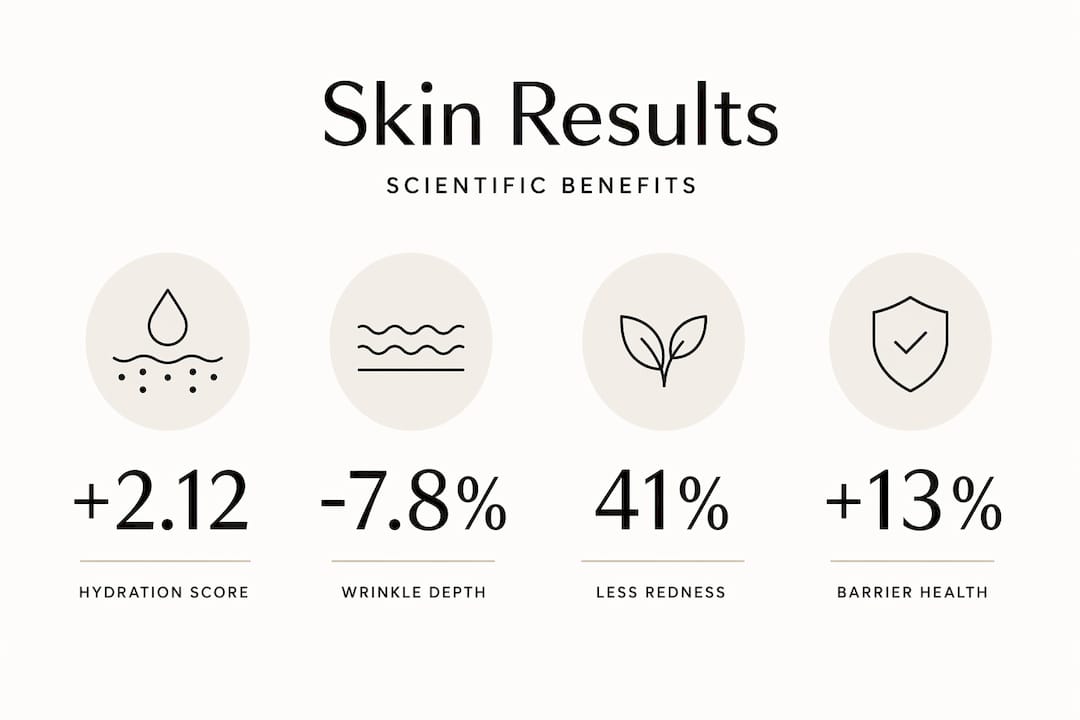
The pooled data is compelling. A 2026 systematic review found that antioxidant supplements improve hydration by an average of 2.12 units and reduce trans-epidermal water loss (TEWL) by 0.68, a meaningful improvement in skin barrier function. TEWL is the rate at which water escapes through your skin. Lower TEWL means a stronger, more intact barrier.
| Metric | Change with antioxidant supplementation |
|---|---|
| Skin hydration score | +2.12 units (average) |
| Trans-epidermal water loss | Reduced by 0.68 |
| Wrinkle severity | Measurable improvement at 8 weeks |
| Skin elasticity | Improved in multiple trials |
Plant extracts rich in phenolics also modulate inflammation. Chronic low-grade inflammation, sometimes called "inflammaging," accelerates collagen breakdown and contributes to dullness, redness, and uneven texture. Flavonoids like quercetin and luteolin suppress pro-inflammatory pathways without the side effects associated with pharmaceutical anti-inflammatories.

The skin benefits of antioxidants extend beyond wrinkle reduction. Barrier repair, evening skin tone, and reducing sensitivity are all documented outcomes in clinical literature. If you want to understand which botanical ingredients deliver the strongest evidence, look for formulas featuring stilbenes, catechins, and carotenoids.
Pro Tip: Antioxidant supplements work best when you are also minimizing oxidative load. That means wearing SPF daily, reducing processed food intake, and managing sleep. The supplement fills gaps; it does not replace the fundamentals.
Comparing vegan collagen alternatives and other plant-based options
Collagen is the most abundant protein in your skin, and its decline with age is the primary structural reason skin loses firmness and develops wrinkles. Traditional collagen supplements come from marine (fish) or bovine (cow) sources. Neither is an option for vegan consumers, which is why the emergence of recombinant collagen is significant.
Recombinant collagen is produced by inserting human collagen genes into microorganisms like yeast, which then produce actual collagen protein through fermentation. This is not a "collagen precursor." It is real, bioidentical collagen produced without animals.
Here is how the main types compare:
| Type | Source | Vegan? | Dose per serving | Clinical evidence |
|---|---|---|---|---|
| Marine collagen | Fish skin/scales | No | 5,000 to 10,000 mg | Strong, multiple trials |
| Bovine collagen | Cow hide/bones | No | 5,000 to 10,000 mg | Strong, multiple trials |
| Recombinant collagen | Microbial fermentation | Yes | 250 to 500 mg | Emerging, promising |
| Plant precursors (vitamin C, silica) | Botanicals | Yes | Varies | Supports synthesis, indirect |
A 60-day clinical trial comparing recombinant vegan collagen to marine collagen found that recombinant collagen matches wrinkle reduction at roughly 1/20th the dose. That is a remarkable finding. It suggests that bioidentical recombinant collagen may be more bioavailable or structurally effective than its animal-derived counterparts, though more research is needed to confirm this across larger populations.
A few important clarifications:
- "Vegan collagen boosters" containing only vitamin C, zinc, and silica are not collagen. They provide precursors that help your body make collagen, which is valuable but different.
- Recombinant collagen is actual collagen protein, produced via biotechnology, and represents a genuine breakthrough for plant-based skincare benefits.
- Most products labeled "vegan collagen" in mainstream retail are precursor blends, not true collagen. Read the ingredient list carefully.
Pro Tip: If you are evaluating a product claiming to be vegan collagen, look for "recombinant collagen" or "biofermented collagen" in the ingredients. If you only see vitamin C and amino acids, it is a precursor formula, which is still useful but works differently.
Browsing the vegan supplements collection and reviewing the beauty ritual protocol can help you build a layered approach that combines precursors with true vegan collagen sources.
Navigating regulations and making informed selections in plant-based beauty supplements
The supplement industry operates under a framework that many consumers do not fully understand, and that gap is where misleading marketing thrives. In the United States, dietary supplements are governed by the Dietary Supplement Health and Education Act (DSHEA) of 1994. Under DSHEA, supplements are not approved by the FDA before they go to market. The manufacturer is responsible for safety and truthful labeling.
What this means practically:
- Structure-function claims are permitted. A brand can say a supplement "supports healthy skin hydration" or "promotes collagen synthesis." These describe how a nutrient affects normal body function.
- Disease claims are not permitted. Saying a supplement "treats eczema" or "cures acne" crosses into drug territory and is illegal without FDA approval.
- Disclaimers are required. Any structure-function claim must include the statement: "This statement has not been evaluated by the Food and Drug Administration. This product is not intended to diagnose, treat, cure, or prevent any disease."
- FDA notification is required. Brands must notify the FDA within 30 days of first marketing a product with a structure-function claim.
- Substantiation is required. Claims must be backed by credible scientific evidence, even if that evidence is not submitted to the FDA.
"Structure/function claims require substantiation, disclaimers, and FDA notification, but cannot imply disease treatment." This distinction is the single most important thing to understand when reading supplement marketing.
Common red flags to watch for when reading labels:
- Language like "clinically proven to eliminate wrinkles" (disease-adjacent, likely unsubstantiated)
- No disclaimer statement on the label
- Proprietary blends with no disclosed ingredient amounts
- Testimonials replacing clinical citations
Pro Tip: Search the brand's website for a certificate of analysis (COA) from a third-party lab. This confirms that what is on the label is actually in the product at the stated dose. No COA, no trust.
Explore vegan supplements guidance and the brand's clean wellness philosophy to understand what transparent, compliant supplement sourcing looks like in practice.
Integrating plant-based beauty supplements into your holistic self-care routine
The most common mistake people make with beauty supplements is expecting topical-speed results from an ingestible product. Your skin renews itself roughly every 28 days. Meaningful structural changes, like improved collagen density or barrier repair, take longer. Most clinical trials measure outcomes at 8 to 12 weeks, and that timeline exists for good reason.
Measurable improvements in skin hydration and wrinkle severity consistently appear after multiple weeks of consistent intake. Eight weeks is a realistic minimum for noticing change. Plan for three months before making a final judgment.
Here is how to build a supplement routine that actually works:
- Start with one or two supplements. Adding five new products at once makes it impossible to know what is working.
- Take supplements consistently at the same time each day. Many fat-soluble antioxidants absorb better with a meal containing healthy fats.
- Pair supplementation with adequate hydration. Skin hydration supplements work better when you are drinking enough water. Aim for at least 2 liters daily.
- Manage stress actively. Cortisol degrades collagen. Adaptogens, breathwork, and sleep all reduce cortisol and amplify your supplement results.
- Track your skin with photos every 4 weeks. Skin changes gradually, and without documentation, it is easy to miss real progress.
Common mistakes to avoid:
- Buying supplements based on packaging or influencer recommendations without checking ingredient evidence
- Stopping a supplement after two weeks because you "don't see results yet"
- Combining multiple collagen products without checking for overlapping doses
- Ignoring sun protection, which is the single most evidence-backed intervention for skin aging
Pro Tip: Vitamin C is a required cofactor for collagen synthesis. If you are taking a collagen supplement (recombinant or otherwise) without adequate vitamin C intake, you are limiting your results. Many plant-based formulas include it for this reason.
Pairing your supplement routine with structured beauty supplement rituals and exploring holistic wellness benefits by body system can help you build a practice that compounds over time.
Why a science-backed, realistic approach is key in plant-based beauty supplementation
Here is an uncomfortable truth about the natural beauty supplement space: the most expensive product is not the most effective one, and taking more supplements does not accelerate results. Skin biology operates on its own timeline. No formula changes that.
The brands worth trusting are the ones that cite specific clinical trials, disclose ingredient doses, and carry third-party lab verification. The ones to avoid are those making vague claims about "cellular renewal" or "age reversal" without a single peer-reviewed citation. Structure-function claims must support normal function, not imply disease treatment, and the presence of a disclaimer does not make an exaggerated claim legitimate.
There is also a deeper point worth making. Plant-based beauty supplements work best when they are part of a lifestyle, not a shortcut around one. The clinical trials showing real results are conducted on participants who are otherwise healthy, sleeping adequately, and not under extreme chronic stress. Supplements fill nutritional gaps and provide targeted bioactives. They do not override poor sleep, chronic inflammation from diet, or daily UV damage without SPF.
The synergy between botanical ingredients and lifestyle is where lasting scientific skin health insights come from. This is not a reason to be cynical about supplements. It is a reason to use them intelligently, as one well-chosen piece of a broader practice. The brands and formulas that align with this perspective, and with a transparent wellness philosophy, are the ones worth your investment.
Explore SACRAHAUS's curated vegan beauty supplements and rituals
If this guide has clarified what to look for and what to avoid, the next step is finding products that actually meet those standards. SACRAHAUS formulates every supplement with clean, plant-based ingredients backed by science, third-party tested, non-GMO, and made in the USA. There are no proprietary blends hiding inadequate doses, and no disease claims dressed up as wellness advice.

Browse the vegan vitamins and supplements collection to find formulas built around botanicals, adaptogens, and antioxidants with transparent ingredient profiles. If you want a structured starting point, the beauty ritual protocol walks you through a layered approach designed to build real results over time. For a broader view of how skin supplements fit into a complete wellness practice, explore the curated wellness collections organized by intention and body system.
Frequently asked questions
How long does it typically take to see results from plant-based beauty supplements?
Most scientific studies report noticeable improvements in skin hydration and wrinkles after 6 to 8 weeks of consistent supplement intake. Measurable changes in skin hydration and wrinkle severity were observed after 8 weeks in a clinical trial with piceatannol, making that a realistic minimum timeline to plan for.
Are vegan collagen supplements as effective as traditional animal-based collagen?
Recent clinical trials show recombinant vegan collagen can reduce wrinkles comparably to marine collagen but at a significantly lower dose. In a 60-day trial, recombinant collagen matched marine collagen's wrinkle reduction at roughly 1/20th the dose, making it a credible plant-based alternative.
What should I look for to ensure plant-based supplements make safe and legal health claims?
Check that claims focus on supporting normal body functions without mentioning disease treatment, and confirm the label includes the required FDA disclaimer. Under FDA regulations, structure/function claims must be truthful, substantiated, and avoid disease-related language entirely.
Can I rely on plant-based supplements alone for skin health?
Supplements support skin health best when combined with a broader routine including daily hydration, a nutrient-dense diet, stress management, and consistent sun protection. Think of them as a targeted addition to a healthy lifestyle, not a replacement for one.