
TL;DR:
- A daily vegan wellness stack should include vitamin B12, D3, and algae omega-3 to fill essential nutrient gaps. Timing supplements with meals and spacing minerals are crucial for optimal absorption and adherence. Personalized blood testing guides precise dosing, while simple routines promote long-term consistency and health.
A daily vegan wellness stack is a structured set of plant-based supplements chosen to fill the nutrient gaps that a whole-food vegan diet cannot reliably close. The core pillars are Vitamin B12, Vitamin D3, and algae-derived omega-3 fatty acids. Each one addresses a specific gap that plant foods leave behind. When you build daily vegan wellness stack habits around these essentials, you create a foundation that supports energy, immunity, bone density, and brain function. The goal is not to take everything at once. It is to select the right supplements, take them at the right time, and make the routine stick.
What supplements should you include when you build a daily vegan wellness stack?
The most critical supplement for any vegan is Vitamin B12. Plant foods contain no reliable B12, and deficiency develops silently over months before symptoms appear. The recommended intake is 250mcg daily or 2,500mcg weekly to prevent deficiency. That weekly dose works well for people who prefer a single high-dose supplement rather than a daily pill.

Vitamin D3 is the second non-negotiable. Most people in northern climates cannot synthesize enough from sunlight alone, and vegans face an added challenge because most D3 supplements come from lanolin, a sheep byproduct. Lichen-derived vegan D3 solves that problem. A maintenance dose of 1,000–2,000 IU daily covers most adults, though blood work will tell you if you need more.
Algae-based omega-3 is the third pillar of a solid daily plant-based health stack. Flaxseed and chia provide ALA, but the body converts very little of it into the EPA and DHA your brain and heart actually use. Algae-based omega-3 oils deliver EPA and DHA directly, skipping the conversion step entirely.
Beyond the core three, consider these based on your diet and activity level:
- Creatine monohydrate: 5g per day supports muscle synthesis in active individuals. Vegans have the lowest baseline creatine levels of any dietary group, so the benefit is measurable.
- Iodine: Seaweed is inconsistent as a source. A low-dose iodine supplement or iodized salt fills the gap reliably.
- Iron: Needed most by menstruating individuals. Absorption from plant sources is lower than from meat, so pairing iron with Vitamin C improves uptake.
- Calcium: Achievable through fortified plant milks and leafy greens, but supplementation makes sense if your diet falls short.
- Zinc: Plant-based zinc is less bioavailable due to phytates in legumes and grains. A modest supplement or soaking legumes before cooking helps.
Pro Tip: Start with B12, D3, and algae omega-3 before adding anything else. Getting those three right gives you 80% of the benefit with a fraction of the complexity.
How do you time and stack supplements for maximum absorption?
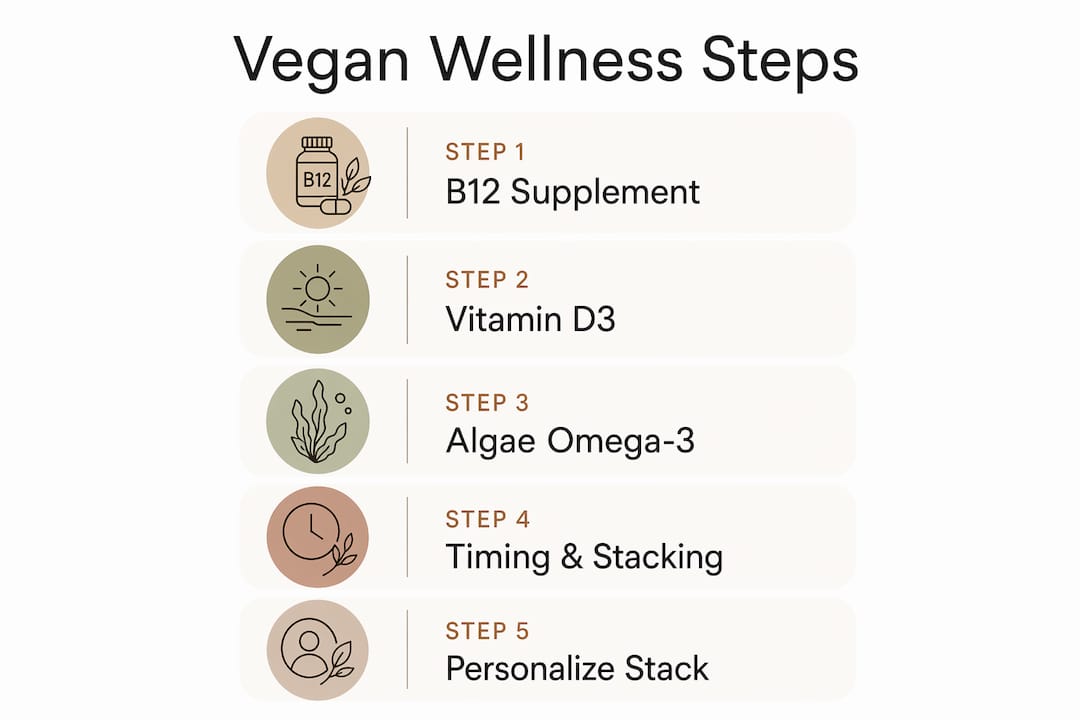
Timing is where most people lose gains they have already paid for. Fat-soluble vitamins like D3 and omega-3 absorb best when taken with a meal that contains fat. A breakfast with avocado, nut butter, or olive oil is ideal. Taking D3 on an empty stomach wastes a significant portion of the dose.
Minerals require more care because they compete with each other. Zinc inhibits copper absorption, and calcium blocks iron uptake when taken at the same time. Spacing mineral doses by at least two hours solves this without any extra effort.
A practical daily schedule looks like this:
- Morning with breakfast (fat-containing meal): Vitamin D3, algae omega-3, and a multivitamin if you use one.
- Midday or with lunch: Iron supplement, taken with a Vitamin C source and away from calcium.
- Afternoon or evening: Calcium, zinc, or magnesium, well separated from iron.
- Any time, consistent daily: Vitamin B12, which is water-soluble and not timing-sensitive.
- Pre or post workout: Creatine monohydrate, which can be taken at any time but pairs well with a training routine anchor.
Habit stacking is the most underrated tool in supplement adherence. Placing supplements near a morning ritual anchor, like your kettle or coffee maker, removes the decision entirely. You do not have to remember. The visual cue does the work. Sacrahaus builds its supplement rituals around exactly this principle, pairing products with daily habits rather than treating them as separate tasks.
Pro Tip: Use a weekly pill organizer and fill it every Sunday. The five-minute setup eliminates daily decision fatigue and makes it obvious at a glance whether you have taken your supplements.
How should you customize your vegan wellness stack based on your needs?
No two people need the same stack. The right approach depends on your health status, activity level, and what your blood work actually shows. Blood testing for Vitamin D, B12, and iron gives you real numbers to work from instead of guessing. Without testing, you might be over-supplementing one nutrient while staying deficient in another.
The choice between an all-in-one multivitamin and a targeted stack is a lifestyle decision as much as a nutritional one. A multivitamin suits people who want simplicity and do not want to manage multiple bottles. A targeted stack suits people who want to dose each nutrient precisely based on their labs. Neither approach is wrong. The best vegan supplements for wellness are the ones you actually take consistently.
Signs that your stack needs adjustment include persistent fatigue (often low B12 or iron), low mood in winter (often low D3), poor recovery from exercise (often low creatine or magnesium), and brittle nails or hair (often low zinc or iodine). These are signals, not diagnoses. A blood panel confirms the cause.
| Nutrient | Deficiency sign | Recommended action |
|---|---|---|
| Vitamin B12 | Fatigue, tingling in hands or feet | Test serum B12; supplement at 250mcg daily |
| Vitamin D3 | Low mood, bone aches, frequent illness | Test 25(OH)D; dose 1,000–2,000 IU daily |
| Iron | Fatigue, pale skin, cold hands | Test ferritin; supplement with Vitamin C |
| Zinc | Slow wound healing, hair loss | Test serum zinc; supplement modestly |
Avoid the trap of adding supplements every time you read about a new benefit. More is not better when it comes to fat-soluble nutrients, and high-dose zinc over time depletes copper. Check your clean ingredient standards before adding anything new to your stack.
What are the most common pitfalls when building a vegan supplement routine?
The single biggest mistake is building a stack that is too complex to maintain. People research every possible deficiency, buy ten supplements, and quit within three weeks because the routine feels like a second job. Pill fatigue is a leading cause of supplement non-adherence, and simplicity is the most effective long-term strategy.
The "one-item rule" is the fix. Start with one supplement, B12, and add others only after the first becomes automatic. This sounds slow, but it works. A habit built over three weeks is far more durable than a ten-supplement protocol started all at once.
Other pitfalls to watch for:
- Ignoring expiry dates: Fat-soluble vitamins degrade faster than water-soluble ones. Check dates every three months.
- Storing supplements in humid spaces: Bathrooms are convenient but humidity degrades capsules. A kitchen cabinet or bedroom drawer is better.
- Skipping professional advice for complex conditions: If you have a diagnosed condition like anemia or osteoporosis, a registered dietitian should review your stack before you self-supplement at high doses.
- Assuming fortified foods cover your needs: Fortified plant milks and cereals help, but portion sizes vary and cooking can reduce nutrient content.
Consistency beats precision every time. A simple stack taken daily for a year outperforms a perfect stack taken three days a week. Build the habit first. Refine the doses later.
For digestive support alongside your core stack, the vegan digestive supplement guide covers how timing and gut health interact with nutrient absorption.
Key Takeaways
A well-built vegan wellness stack starts with B12, D3, and algae omega-3, then adds targeted nutrients based on blood work, timed correctly, and kept simple enough to sustain daily.
| Point | Details |
|---|---|
| B12 is non-negotiable | Take 250mcg daily or 2,500mcg weekly to prevent deficiency. |
| Timing improves absorption | Take D3 and omega-3 with fat-containing meals; separate iron from calcium by 2+ hours. |
| Blood work guides dosing | Test D, B12, and iron before adding or increasing any supplement. |
| Simplicity drives adherence | Use the one-item rule to build habits before expanding your stack. |
| Quality sources matter | Choose lichen-derived D3 and algae-based omega-3 for vegan compliance and absorption. |
What I have learned from years of building plant-based wellness routines
The most common mistake I see is treating a supplement stack like a shopping list rather than a practice. People buy everything at once, take it all for two weeks, and then stop because it feels like too much. The ritual matters more than the formula.
When I think about what actually works, it comes down to three things: start with B12 because it is the one deficiency that causes irreversible nerve damage if ignored long enough, pair your supplements with something you already do every morning, and resist the urge to add more until what you have is genuinely automatic.
The precision versus convenience debate is real, but it is also a false choice for most people. You do not need to choose between a perfectly calibrated targeted stack and a simple multivitamin. You can start with convenience and add precision over time as you get your labs done and learn what your body actually needs.
What I find most interesting is how much the ritual itself contributes to consistency. Placing your supplements next to your morning coffee is not a trick. It is a design decision. You are building an environment that makes the right behavior the easy behavior. That is the same philosophy behind how Sacrahaus curates its wellness collections, grouping supplements by intention rather than by ingredient so the decision is already made for you.
— Sacrahaus
Sacrahaus vegan essentials for your daily stack
Sacrahaus builds every product around the same principle this article covers: fill the real gaps, use clean ingredients, and make the routine easy to keep.

The Vegan Essentials collection brings together iron strips, creatine monohydrate, mineral supplements, and greens powders in one curated place. Every product is third-party tested, non-GMO, and made in the USA. If you are physically active, the Sacrahaus Vegan Creatine Monohydrate delivers a pure 5g dose with no fillers. For daily energy support without stimulant crashes, the vegan superpowders range covers clean, plant-based energy and nutrient formulas. Start with what your blood work shows you need most, and build from there.
FAQ
What is the most important supplement for vegans?
Vitamin B12 is the most critical supplement for vegans because plant foods contain no reliable source. The recommended dose is 250mcg daily or 2,500mcg weekly.
Can I get enough Vitamin D3 from sunlight as a vegan?
Most people in northern climates cannot synthesize enough D3 from sunlight year-round. A daily dose of 1,000–2,000 IU from lichen-derived D3 covers the gap for most adults.
Should I take an all-in-one multivitamin or build a targeted stack?
A multivitamin suits busy individuals who want simplicity, while a targeted stack works better for those who dose based on blood test results. Both approaches work when followed consistently.
How do I avoid nutrient competition in my supplement routine?
Take iron separately from calcium and zinc, spaced at least two hours apart. This prevents minerals from blocking each other's absorption and improves the effectiveness of each dose.
How do I know if my vegan wellness stack is working?
Get blood work done for B12, Vitamin D (25-OH), ferritin, and zinc before starting and again after three to six months. Improving numbers alongside better energy and recovery confirm your stack is effective.