
TL;DR:
- Combining vegan supplements safely involves strategic pairing and timing to maximize absorption and avoid adverse interactions. Properly scheduling supplements, such as taking iron with vitamin C in the morning and calcium in the evening, reduces conflicts and improves effectiveness. Avoid stacking multiple blood-thinning botanicals and consult healthcare providers to prevent dangerous drug interactions.
Combining vegan supplements safely means pairing nutrients in ways that maximize absorption and prevent adverse interactions. Plant-based diets often require targeted supplementation for iron, vitamin D3, omega-3s, and B12, but adding multiple products without a plan creates real risks. Calcium blocks iron uptake. High-dose zinc depletes copper. Certain botanicals interfere with prescription drugs. The clinical term for this discipline is "supplement interaction management," and it applies whether you take two capsules or ten. This guide gives you the framework to build a vegan supplement plan that actually works.
What are the most important supplement interactions for vegans to know?
Supplement interactions fall into four categories: synergistic, competing, blocking, and dangerous. Understanding which category each of your combinations falls into is the foundation of safe vegan supplementation.
Synergistic pairs that work together

Vitamin C and non-heme iron are the clearest example of a synergistic pair. Vitamin C boosts non-heme iron absorption by two to threefold, which is critical on a plant-based diet where iron comes exclusively from plant sources. Taking 250–500 mg of vitamin C alongside your iron supplement is not optional for vegans. It is the difference between correcting a deficiency and wasting a supplement.
Vitamin D3 and K2 work together in a similar way. D3 increases calcium absorption from the gut, and K2 directs that calcium into bones rather than arteries. Taking D3 without K2 at higher doses can raise blood calcium in ways that stress soft tissue. Pairing them at moderate doses with a fat-containing meal is the standard clinical approach.
Competing pairs that block each other
Calcium and iron compete directly for the same intestinal transporter, called DMT1. Calcium at 500 mg or more cuts iron absorption by roughly 50%, which means taking them together effectively halves your iron dose. A two-hour gap between these two minerals is the minimum required to avoid this conflict.
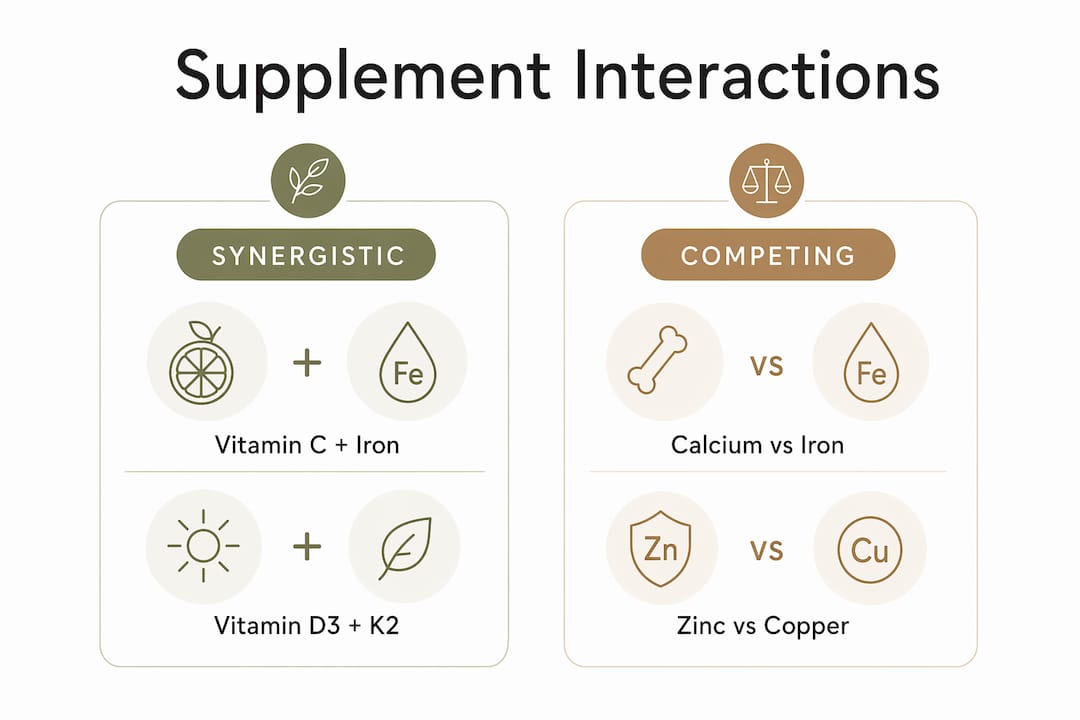
Zinc and copper follow a similar pattern. High-dose zinc above 40 mg per day triggers the gut to produce metallothionein, a protein that traps copper and prevents its absorption. Over months, this causes copper deficiency with potential neurological consequences. Anyone supplementing zinc above 25 mg daily should co-supplement with 1–2 mg of copper.
Dangerous combinations to avoid
High-dose vitamin E above 400 IU can inhibit vitamin K's clotting role, raising bleeding risk. Stacking multiple blood-thinning supplements, such as vitamin E, ginkgo, and omega-3s, compounds this risk significantly. These combinations require medical oversight, not just careful timing.
Pro Tip: Keep a written list of every supplement you take, including doses. Pharmacists can screen for interactions in under five minutes if you hand them a clear list.
How to schedule your vegan supplements throughout the day
Timing is the most practical tool for resolving absorption conflicts. Minerals like calcium and iron share the same gut transporter, so separating them by time is as effective as not taking them together at all.
The AM/PM split strategy
The most reliable approach is a morning and evening split. Take iron with vitamin C in the morning on an empty stomach. This pairing optimizes iron absorption because the transporter is unoccupied and vitamin C converts ferric iron to the more absorbable ferrous form. Reserve calcium, magnesium, and zinc for the evening, ideally with dinner.
Fat-soluble vitamins, specifically A, D, E, and K, require dietary fat for absorption. Take these with your largest meal of the day, which typically contains the most fat. A tablespoon of olive oil or a handful of nuts is sufficient. Taking fat-soluble vitamins on an empty stomach reduces their uptake significantly.
A practical daily timing table
| Time | Supplement | Notes |
|---|---|---|
| Morning (empty stomach) | Iron + Vitamin C | Take together; avoid calcium within 2 hours |
| Morning (with breakfast) | Vitamin D3 + K2, Omega-3 | Take with fat-containing food |
| Midday (with lunch) | B12, Multivitamin | Food reduces nausea from B vitamins |
| Evening (with dinner) | Calcium, Magnesium | Separate from morning iron by 8+ hours |
| Evening (with dinner) | Zinc + Copper | Pair copper if zinc exceeds 25 mg |
Splitting mineral supplements into morning and evening doses is the single most effective structural change most people can make to their supplement routine. The schedule above requires no extra products and no additional cost.
Pro Tip: Set two phone alarms labeled "AM stack" and "PM stack" rather than relying on memory. Consistency matters more than perfect timing on any single day.
What are the risks when combining supplements with medications?
Supplement-drug interactions operate at a different level than nutrient-nutrient interactions. Many of them occur in the liver, not the gut, and timing changes nothing.
St. John's Wort and the CYP450 problem
St. John's Wort is the most clinically significant botanical for drug interactions. It affects the metabolism of roughly 50% of prescription drugs by inducing CYP450 liver enzymes, particularly CYP3A4. This means it accelerates the breakdown of drugs including oral contraceptives, antidepressants, antiretrovirals, and blood thinners, reducing their effectiveness. The effect persists for weeks after stopping the supplement. No timing strategy resolves this. The only safe approach is to avoid St. John's Wort entirely if you take any prescription medication.
Serotonergic stacking risks
Combining supplements that raise serotonin levels creates a risk of serotonin syndrome, a potentially serious condition. 5-HTP, SAMe, and St. John's Wort all increase serotonergic activity. Taking any of these alongside SSRIs or SNRIs amplifies the risk substantially. Symptoms range from agitation and rapid heart rate to severe neurological effects. This combination requires explicit approval from a prescribing physician, not just a pharmacist.
Blood-thinning supplement stacks
Pharmacists flag additive blood-thinning effects as one of the most commonly overlooked supplement risks. Stacking omega-3s, vitamin E, ginkgo, and garlic extract alongside prescription anticoagulants like warfarin can elevate bleeding risk to a clinically significant level, often without any visible warning signs until an injury occurs.
Key populations requiring extra caution:
- People taking warfarin, heparin, or direct oral anticoagulants
- Pregnant or breastfeeding individuals (many supplements lack safety data for these groups)
- Those with thyroid conditions (calcium, iron, and magnesium all reduce levothyroxine absorption; take thyroid medication alone, 4 hours before minerals)
- Anyone with chronic kidney or liver disease, where clearance of fat-soluble vitamins is impaired
Consulting a healthcare provider before adding any new supplement is the standard recommendation when medications are involved. Free online interaction checkers, such as those offered by clinical pharmacy databases, provide a useful first screen but do not replace professional review.
How to build a simple, effective vegan supplement stack
The most common mistake in supplement stacking is adding too many products at once. Starting with 1–3 targeted supplements based on blood work is safer and more effective than building a complex stack from the start.
A step-by-step approach to building your stack
- Get baseline blood work. Test for vitamin D, B12, ferritin, zinc, and omega-3 index before buying anything. Supplement what is actually low, not what you assume is low.
- Build a foundation first. For most vegans, the core stack is vitamin D3 plus K2, algae-based omega-3 EPA/DHA, B12 (methylcobalamin form), and magnesium glycinate. These address the nutrients most likely to be insufficient on a plant-based diet.
- Add one supplement at a time. Wait two to four weeks before adding the next product. This lets you identify which supplement causes any new symptom or benefit.
- Audit for overlaps. Many greens powders, multivitamins, and individual supplements contain the same nutrients. Adding a multivitamin on top of individual iron and zinc supplements can push cumulative intake above safe upper limits.
- Choose transparent labels. Avoid proprietary blends that list ingredients without individual doses. You cannot manage interactions or cumulative intake without knowing exact amounts. Third-party tested products, including those that are certified clean ingredients, remove the guesswork on label accuracy.
- Keep a supplement log. Record what you take, when, and how you feel. After 30 days, patterns become visible. Fatigue that starts after adding a new product is a signal worth investigating.
Pro Tip: Vitamin A toxicity is one of the most underestimated risks in supplement stacking. If your multivitamin already contains 100% of the daily value for vitamin A, do not add a separate cod liver oil or high-dose retinol supplement.
Key Takeaways
Combining vegan supplements safely requires separating competing minerals by time, pairing synergistic nutrients deliberately, and treating botanical supplements with the same caution as pharmaceutical drugs.
| Point | Details |
|---|---|
| Separate iron and calcium | Take iron in the morning and calcium in the evening; a 2-hour gap cuts absorption loss by half. |
| Pair iron with vitamin C | Vitamin C increases non-heme iron absorption by two to threefold, critical on a plant-based diet. |
| Watch zinc and copper | Zinc above 25 mg daily depletes copper; always co-supplement with 1–2 mg of copper. |
| Avoid St. John's Wort with medications | It affects metabolism of roughly 50% of prescription drugs and timing does not resolve this risk. |
| Start small and test | Begin with 1–3 supplements based on blood work, then add one at a time over weeks. |
What I've learned from years of watching people stack supplements wrong
The most persistent myth in the wellness space is that "natural" means safe to combine freely. It does not. The misconception that natural equals safe leads people to stack five or six products without checking for overlaps, and the consequences are subtle enough that most people never connect them to their supplements. Fatigue, poor sleep, and digestive issues are the most common signals, and they are easy to dismiss.
What actually works is restraint combined with awareness. I have seen people resolve years of low energy not by adding more supplements, but by separating their iron and calcium and adding vitamin C to their morning routine. The change cost nothing. The result was measurable within weeks.
The other pattern worth naming is the complexity trap. A ten-product stack feels thorough. It is usually counterproductive. Interactions multiply with each addition, and the signal-to-noise ratio drops. You stop knowing what is working. The people who get the best results from supplementation tend to take four to six products, know exactly why they take each one, and adjust based on regular blood work rather than marketing claims.
Collaboration with a healthcare provider is not a bureaucratic step. It is the fastest path to a stack that actually fits your body, your medications, and your goals. Sacrahaus builds every product with transparent ingredient sourcing and third-party testing precisely because informed people make better decisions when they can see exactly what is in the bottle.
— Sacrahaus
Sacrahaus vegan essentials, formulated for safe daily use
Sacrahaus designs its vegan supplement line around the principle that clean formulation and transparent dosing are prerequisites for safe stacking, not optional features.

The Sacrahaus Vegan Essentials collection covers the nutrients most critical for plant-based diets: iron strips formulated for rapid absorption, magnesium glycinate for evening use, and greens powders that list every ingredient and dose clearly. Every product is third-party tested, non-GMO, and made in the USA. The iron strips are particularly well-suited for morning stacking because they dissolve without water and pair naturally with a vitamin C source. Browse the full vegan supplement collection to build a stack that fits your specific goals and existing routine.
FAQ
Can you take iron and calcium together?
No. Calcium at 500 mg or more reduces iron absorption by roughly 50%. Separate them by at least two hours, with iron in the morning and calcium in the evening.
What vegan supplements should you take in the morning?
Iron with vitamin C, vitamin D3 with K2, and algae-based omega-3s are best taken in the morning with food. Iron absorbs best on an empty stomach; fat-soluble vitamins need a fat-containing meal.
Is it safe to combine zinc and magnesium?
Yes, at standard doses. Zinc and magnesium do not compete significantly for absorption. Take both in the evening with food. Keep zinc below 25 mg daily unless a healthcare provider recommends otherwise.
Does St. John's Wort interact with vegan supplements?
St. John's Wort interacts primarily with prescription medications, not other supplements, by inducing CYP450 liver enzymes. It affects the metabolism of roughly 50% of common prescription drugs and should be avoided by anyone on medication.
How many vegan supplements can you safely take at once?
Starting with 1–3 targeted supplements based on blood work is the safest approach. Each addition multiplies potential interactions. Most people on a plant-based diet cover their core needs with vitamin D3, B12, omega-3s, and magnesium.