
TL;DR:
- Gummy supplement quality is confirmed through FDA cGMP compliance, third-party certifications, and batch-specific testing. Proper lab methods, stability studies, and contamination controls ensure products deliver safe, accurate, and effective doses. Transparency with finished-product Certificates of Analysis demonstrates credible quality assurance.
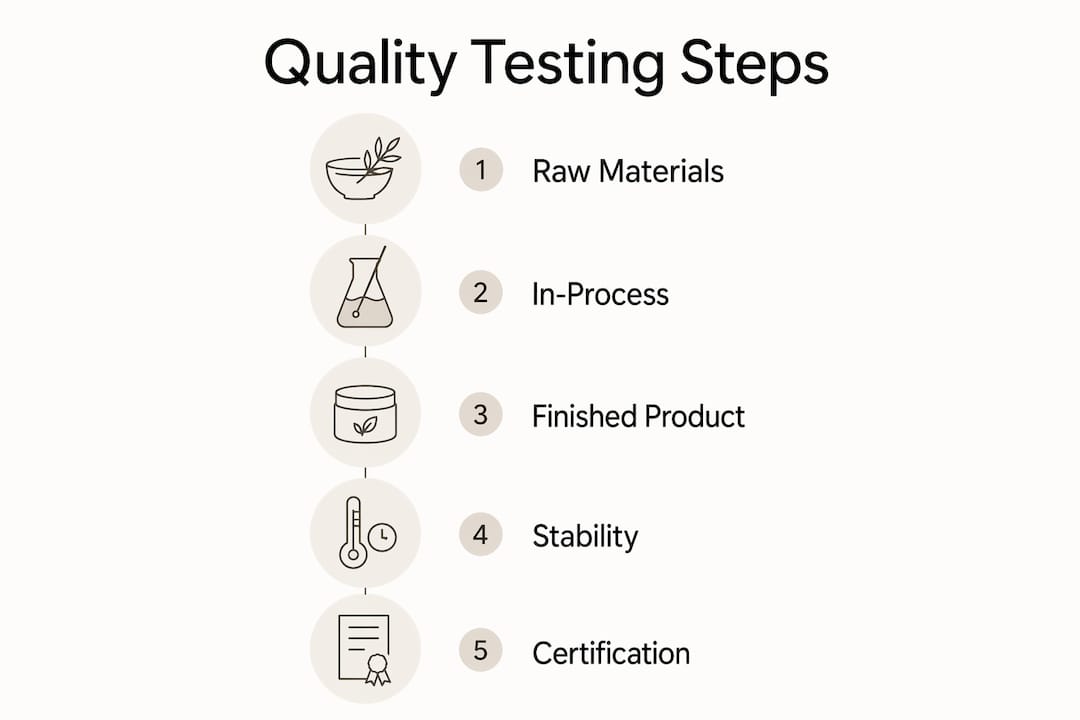
Gummy supplement quality testing is defined as the multi-step process of verifying ingredient potency, safety, and consistency through regulatory compliance, certified laboratory analysis, and manufacturing controls. The industry standard for this process is governed by FDA current Good Manufacturing Practices (cGMP) under 21 CFR Part 111, which requires ingredient verification, batch testing, and contamination control at every production stage. Third-party certifications from NSF International and USP add an independent layer, covering over 280 contaminant screenings and unannounced facility audits. Batch-specific Certificates of Analysis (COAs) are the consumer-facing proof that a product passed every test. Understanding this process helps you choose supplements that actually deliver what the label promises.
How gummy supplement quality is tested: certifications and regulatory benchmarks
The FDA cGMP framework is the legal floor for every supplement manufacturer in the United States. Under 21 CFR Part 111, manufacturers must verify raw ingredient identity, test finished batches for potency and purity, and document every step. Failure to comply can result in product recalls and facility shutdowns. This framework applies to gummies exactly as it does to capsules or tablets.
Third-party certifications go further than the legal minimum. NSF International and USP each run independent audits that include on-site facility inspections and product testing. NSF and USP certifications screen for heavy metals, pesticides, microbial contaminants, and label-claim accuracy. A product carrying one of these seals has been tested by a lab with no financial stake in the outcome.
The scope of testing differs meaningfully between certification programs. The table below shows the key distinctions:
| Certification | Testing scope | Audit frequency |
|---|---|---|
| FDA cGMP (21 CFR Part 111) | Ingredient identity, batch potency, contamination control | Regulatory inspection (variable) |
| NSF International | 280+ contaminants, label claim verification, facility audit | Annual, with unannounced visits |
| USP Verified | Ingredient identity, potency, disintegration, contaminants | Annual |
| COA (batch-specific) | Potency, heavy metals, microbial limits, label accuracy | Per production batch |
Finished product verification is the step most brands skip. Raw material testing confirms what went into the gummy, but finished product testing confirms what came out after heat, mixing, and molding. A COA issued on the finished gummy is the only document that accounts for everything that happened during manufacturing.
Pro Tip: When evaluating a supplement brand, ask specifically for a finished-product COA, not a raw material certificate. The two documents test very different things.
What lab methods are used to test gummy supplement potency?

Gummy supplements present a testing challenge that tablets and capsules do not. The gelatinous matrix traps active ingredients, and standard extraction methods designed for powders or tablets underestimate gummy potency by failing to fully release those compounds. A lab using tablet protocols on a gummy sample will report lower potency than actually exists. That false reading can cause manufacturers to add unnecessary overages or mislabel products.
The correct approach uses matrix-validated extraction methods built specifically for gummy samples. These methods account for the gelatin or pectin base and are validated to achieve full compound recovery before any measurement is taken.
The most critical techniques in accurate gummy potency analysis include:
- Cryo-milling with liquid nitrogen: Gummy samples are frozen and ground at extremely low temperatures. This prevents heat from degrading heat-sensitive vitamins like vitamin C or B-complex compounds during the grinding process.
- Matrix-validated extraction: The solvent system and extraction conditions are validated specifically for the gummy's base ingredients, not borrowed from a tablet method.
- Recovery checks and internal standards: Labs spike samples with a known quantity of the target compound and measure how much they recover. A recovery rate below 95% signals a flawed method.
- Homogeneity testing: Active ingredients must be evenly distributed across every gummy in a batch. Labs test multiple units from the same batch to confirm consistent dosing from piece to piece.
Homogeneity testing matters more than most consumers realize. A batch where vitamin D is unevenly distributed means some gummies deliver twice the dose while others deliver almost none. This is a manufacturing defect, not just a labeling issue.
Pro Tip: Ask your supplement brand which specific extraction method their lab uses for gummy samples. "Matrix-validated extraction" is the phrase you want to hear. If they cannot answer, the testing may not be gummy-specific.
What is stability testing for gummy supplements, and why does it matter?
Stability testing is the process of measuring how a gummy supplement's potency, appearance, and safety change over time under defined storage conditions. It is the scientific basis for the expiration date printed on every bottle. Without real stability data, an expiration date is a guess.
Two types of studies generate this data. Real-time stability studies store products at the intended shelf conditions (typically 25°C and 60% relative humidity) and test them at set intervals: initial, 3 months, 6 months, 12 months, and 24 months. Full shelf-life validation requires real-time data covering the entire claimed shelf life. Accelerated stability studies store products at elevated temperature and humidity (typically 40°C and 75% relative humidity) to predict degradation pathways faster. They support early product decisions but cannot replace real-time data for expiration claims.
The table below outlines a standard stability study timeline:
| Study interval | Primary assessments |
|---|---|
| Initial (T0) | Potency, appearance, moisture, microbial count, pH |
| 3 months | Potency, color change, texture, water activity |
| 6 months | Potency, microbial limits, heavy metals, sensory |
| 12 months | Full potency panel, contaminants, physical integrity |
| 24 months | Full panel, expiration date confirmation |
Overages are the extra percentage of an active ingredient added at manufacturing to compensate for potency loss over shelf life. Manufacturers apply overages of 20%–50% when stability data justifies it. The critical word is "justified." Adding overages without stability data to support the calculation creates a different problem: the product may exceed safe upper limits at the time of manufacture. For fat-soluble vitamins like A, D, E, and K, unjustified overages risk toxicity because these compounds accumulate in body tissue.
Packaging is not a secondary concern in stability. HDPE bottles with desiccants and strong oxygen barriers are the standard for preserving gummy potency. Inadequate packaging accelerates moisture absorption, which softens gummies, promotes microbial growth, and degrades active ingredients faster than the stability study predicted.
What contamination risks are unique to gummy manufacturing?
Gummy production introduces contamination risks that do not exist in capsule or tablet manufacturing. The warm, moist, sugar-rich environment created during cooking and molding is ideal for microbial growth if sanitation lapses. Water activity and pH management are the two most critical controls. Water activity must be kept low enough to prevent mold and bacterial growth, and pH is typically calibrated to a range of 3.2–4.5 to maintain stability and inhibit spoilage organisms.
Starch molds used to shape gummies carry their own contamination risk. Residual starch from molds can introduce foreign material into finished products if cleaning protocols are not rigorous. Allergen cross-contamination is a separate concern. Many gummy formulas use ingredients derived from common allergens, and shared equipment without validated cleaning procedures can transfer those allergens to products labeled allergen-free.
Quality control measures that address these risks include:
- Microbial testing: Finished gummies are tested for total aerobic count, yeast, mold, and specific pathogens like Salmonella and E. coli.
- Heavy metal screening: Lead, arsenic, cadmium, and mercury are tested in finished products, not just raw materials.
- Organoleptic evaluation: Trained evaluators assess color, aroma, and texture across batches to catch physical inconsistencies before products ship.
- Environmental monitoring: Air particle counts, surface swabs, and humidity readings in the production facility are tracked continuously.
- Foreign object detection: Metal detectors and visual inspection catch physical contaminants like equipment debris or fibers.
Production environment safety depends on sanitation, allergen management, and airborne particle monitoring working together. A clean ingredient list means nothing if the manufacturing environment introduces contamination after formulation.
Pro Tip: A batch-specific COA should list microbial test results and heavy metal levels for that exact production run. A generic COA from a raw material supplier does not confirm the finished gummy is clean.
How can you use a Certificate of Analysis to verify gummy supplement quality?
A Certificate of Analysis is a lab-issued document that reports test results for a specific batch of a finished product. Batch-specific COAs validate that the product matches its label claims and is free of contaminants at the levels tested. A COA tied to a lot number is the only document that tells you what was actually in the bottle you are holding.
A complete COA for a gummy supplement should include:
- Potency results: Measured levels of each active ingredient compared to the label claim, expressed as a percentage of label.
- Microbial limits: Total plate count, yeast, mold, and pathogen results with pass/fail status against USP or FDA limits.
- Heavy metals: Tested levels of lead, arsenic, cadmium, and mercury against established safe limits.
- Physical testing: Weight per unit, moisture content, and water activity measurements.
- Testing lab identity: The name of the third-party lab that conducted the analysis.
Generic supplier COAs cover raw materials before manufacturing. They do not account for ingredient interactions, heat exposure during production, or contamination introduced during molding and packaging. Always request the finished-product COA, and verify the testing lab is independent of the manufacturer.
Clean-label ingredient sourcing strengthens COA results by reducing the number of undisclosed compounds that could appear in testing. Brands that publish COAs publicly and link them to specific lot numbers demonstrate a level of transparency that generic "third-party tested" claims do not.
Key Takeaways
Gummy supplement quality is verified through FDA cGMP compliance, matrix-specific lab methods, stability studies, contamination controls, and batch-specific COAs that together confirm potency, safety, and label accuracy.
| Point | Details |
|---|---|
| Regulatory baseline | FDA cGMP (21 CFR Part 111) requires batch testing, ingredient verification, and contamination control for all supplements. |
| Lab method accuracy | Cryo-milling and matrix-validated extraction prevent false low potency readings caused by the gummy's gelatinous base. |
| Stability testing | Real-time studies at 12–24 months are required to validate expiration dates and calculate safe ingredient overages. |
| Contamination controls | Microbial testing, heavy metal screening, and environmental monitoring address risks unique to warm, moist gummy production. |
| COA transparency | Batch-specific COAs tied to a lot number are the only documents that confirm what is actually in a finished gummy product. |
What I have learned from watching gummy testing evolve
The biggest shift I have seen in gummy supplement quality assurance is the move away from borrowed lab methods. For years, contract labs applied tablet and capsule protocols to gummy samples without validating those methods for a gelatinous matrix. The result was systematic underreporting of potency, which led manufacturers to add overages that were not scientifically grounded. That cycle created real risk, especially for fat-soluble vitamins where the margin between therapeutic and toxic is narrow.
The second shift is environmental. The FDA's increased focus on production environment controls reflects a hard-won lesson: a clean formula can be contaminated by a dirty facility. Airborne particle counts, allergen management, and sanitation validation are now non-negotiable parts of quality assurance, not optional extras.
What I tell anyone choosing a gummy supplement is this: the label is marketing. The COA is evidence. A brand that publishes batch-specific COAs, names its testing lab, and can explain its extraction method is a brand that has done the work. A brand that offers only a "third-party tested" badge with no supporting documentation has given you a claim, not proof.
The brands I trust are the ones that treat transparency as a product feature, not a compliance checkbox. That means publishing COAs, sourcing clean, traceable ingredients, and investing in stability studies that run the full shelf life. Anything less is a shortcut that eventually shows up in the product.
— Sacrahaus
Sacrahaus gummy supplements: quality you can verify
Sacrahaus formulates its vegan gummy supplements under FDA cGMP standards with third-party testing at every production stage. Each batch goes through finished-product COA verification covering potency, heavy metals, and microbial limits. Ingredients are sourced for clean-label transparency, and stability testing supports every expiration date on the label.

If you want supplements where the testing documentation matches the label claims, the Sacrahaus vegan essentials collection is the place to start. Every product in the range is non-GMO, made in the USA, and backed by the kind of quality controls this article describes.
FAQ
What does FDA cGMP mean for gummy supplements?
FDA cGMP (21 CFR Part 111) requires manufacturers to verify ingredient identity, test finished batches for potency and purity, and document every production step. Compliance is the legal minimum for selling supplements in the United States.
Why do gummies need different lab testing methods than capsules?
The gelatinous matrix in gummies traps active ingredients, causing standard tablet extraction methods to underreport potency. Cryo-milling and matrix-validated extraction are required to release and accurately measure compounds in gummy samples.
What should a gummy supplement COA include?
A complete COA should list potency results for each active ingredient, microbial test results, heavy metal levels, physical measurements like weight and moisture, and the name of the independent testing lab.
How do overages affect gummy supplement safety?
Overages are extra ingredient amounts added to compensate for potency loss over shelf life. Without stability data to justify the calculation, overages for fat-soluble vitamins like A, D, E, and K can push doses into toxic ranges at the time of manufacture.
How can you confirm a supplement brand's third-party testing claims?
Request a batch-specific COA tied to the lot number on your product. Verify the testing lab is independent of the manufacturer, and check that the COA covers finished product results, not just raw material certificates.