
TL;DR:
- Plant-based supplements help fill nutritional gaps like B12, D3, omega-3s, zinc, and iron in vegan diets. Choosing bioavailable nutrient forms, vegan capsules, and timing intake with meals optimizes absorption and effectiveness. Regular blood tests ensure proper nutrient levels and help adjust your supplement strategy over time.
Plant-based dietary supplements are defined as nutrients derived entirely from botanical, algal, or fungal sources, formulated to fill the specific gaps that plant-based diets create. Switching to plant-based supplements is not simply a lifestyle preference. It is a nutritional strategy that addresses real deficiency risks. Ignoring these gaps can cause fatigue, bone loss, nerve damage, and immune dysfunction over time. Nutrients like vitamin B12, D3, omega-3 fatty acids, zinc, and iron are the most commonly under-supplied in plant-based diets, and each requires a targeted approach to supplementation. This guide covers which nutrients matter most, how to choose forms that actually absorb, and how to time your intake for maximum effect.
What does switching to plant-based supplements actually require?
The first thing to understand is that not all plant-based supplements are equal. The industry term for what you are looking for is "vegan-compliant bioavailable supplementation," meaning the nutrient form, dose, and delivery method all meet plant-based standards and absorb effectively in the body.

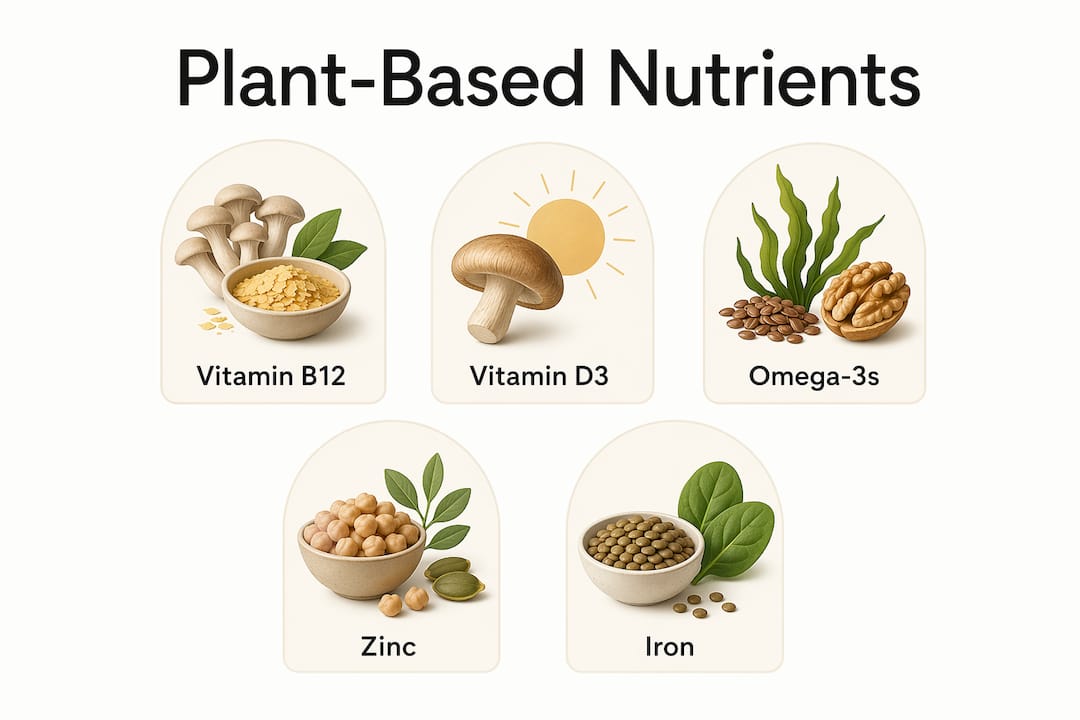
The five nutrients that demand the most attention are vitamin B12, vitamin D3, omega-3 fatty acids (DHA and EPA), zinc, and iron. Each one has a plant-derived form that works, and a cheaper synthetic or animal-derived form that either underperforms or disqualifies the product entirely.
Recommended dosages for plant-based diets are 1,000–2,500 mcg of B12 two to three times weekly or 250 mcg daily, 2,000–4,000 IU of lichen-sourced D3 daily, and 250–500 mg of algae-derived DHA daily. These are not arbitrary numbers. They reflect the body's reduced conversion efficiency from plant precursors and the lower baseline stores typical in people eating no animal products.
The table below summarizes the key nutrients, their preferred plant-based forms, and why each form matters.
| Nutrient | Best plant-based form | Why it matters |
|---|---|---|
| Vitamin B12 | Methylcobalamin | More bioavailable than cyanocobalamin |
| Vitamin D3 | Lichen-derived cholecalciferol | Identical to animal-sourced D3, fully vegan |
| Omega-3 (DHA/EPA) | Algae-derived | Delivers long-chain fatty acids directly |
| Zinc | Chelated zinc (zinc bisglycinate) | Bypasses phytate interference |
| Iron | Ferrous bisglycinate | Gentler absorption, less oxidative stress |
| Vitamin K2 | MK-7 from natto fermentation | Supports D3 activity and bone health |
Pro Tip: If a supplement lists only "vitamin D" without specifying the source, assume it is lanolin-derived (from sheep's wool) and not vegan. Always look for "lichen-derived D3" or "vegan D3" explicitly on the label.
How do you choose a supplement that actually works?
Quality in plant-based supplements comes down to three factors: capsule composition, nutrient form, and third-party verification. Most adults focus only on the ingredient list and miss the other two.
Capsules made from hypromellose (HPMC), V-Caps, or tapioca softgels are vegan. Gelatin capsules are animal-derived and disqualify an otherwise plant-based formula. This is a non-negotiable check. Even a supplement with fully plant-derived active ingredients fails vegan compliance if it is encased in gelatin.
Nutrient form is equally critical. The supplement industry frequently uses cheaper synthetic forms like cyanocobalamin for B12 and lanolin-sourced D3, which may have inferior absorption or are not vegan compliant. Methylcobalamin for B12 and lichen-derived D3 are the correct choices. For zinc, chelated forms like zinc bisglycinate absorb significantly better than zinc oxide, which is the cheapest and least effective option.
When reading labels, look for these specific markers:
- Capsule type: HPMC, V-Caps, or tapioca only
- B12 form: methylcobalamin, not cyanocobalamin
- D3 source: lichen-derived, explicitly stated
- Omega-3 source: algae-derived, with both EPA and DHA listed in milligrams
- Zinc form: bisglycinate or picolinate, not oxide
- Certifications: third-party tested, non-GMO, and ideally certified vegan by a recognized body
Pro Tip: For omega-3 supplements, check the oxidation level if the brand publishes it. Oxidized fish or algae oil delivers fewer active fatty acids and may cause more harm than benefit. Reputable brands list TOTOX values or state "oxidation tested."
You can also use resources like clean ingredient guides to cross-reference what you find on labels against established quality benchmarks.
When and how should you take plant-based supplements?
Timing your supplements correctly can meaningfully improve how much your body actually absorbs. The rules differ by nutrient type, and getting them wrong is one of the most common reasons supplementation underperforms.
Fat-soluble vitamins require dietary fat to absorb. Vitamins D3 and K2 absorb best with your largest meal, which typically contains the most fat. Taking D3 on an empty stomach or with a low-fat snack reduces absorption significantly. Always pair these two together, since K2 directs the calcium that D3 mobilizes into bones rather than arteries.
Follow this sequence for the most common plant-based supplements:
- Morning with breakfast (fat-containing meal): Vitamin D3, vitamin K2, and algae-based omega-3s.
- Morning or midday, away from food: Vitamin B12, since it absorbs sublingually or in the absence of other competing nutrients.
- With a vitamin C source: Iron supplements. Vitamin C converts iron to its more absorbable ferrous form. Avoid coffee, tea, or calcium supplements within two hours of iron intake, as these reduce iron absorption substantially.
- Evening with dinner: Zinc, magnesium, and any adaptogen or mushroom supplements that support sleep and recovery.
- Separate from zinc: Copper-rich foods or copper supplements, since high zinc intake competes with copper absorption over time.
Pro Tip: Split your B12 dose if you are taking a higher weekly amount. The body absorbs a smaller percentage of B12 as the dose increases, so two smaller doses across the week outperform one large dose in terms of total uptake.
What are the most common mistakes when transitioning to vegan supplements?
The single most widespread mistake is relying on a generic multivitamin to cover all plant-based nutritional needs. Many brands include 30–50 ingredients but skimp on key bioavailable nutrients like methylcobalamin or algae omega-3s, leading to ineffective supplementation. A multivitamin that lists B12 as cyanocobalamin at 10 mcg is not addressing your B12 needs. It is providing the appearance of coverage without the substance.
The second major error is ignoring omega-3 long-chain fatty acid needs. ALA from flaxseed and chia seeds does not convert efficiently to DHA and EPA in the body. Algae-based omega-3 supplements delivering both EPA and DHA significantly improve omega-3 status in vegans, while ALA-only sources do not. This is one of the most clinically significant gaps in plant-based nutrition.
Mineral absorption also trips up many people. Phytates in plant foods reduce zinc and iron bioavailability by up to 50%. That means eating zinc-rich plant foods like pumpkin seeds or lentils does not guarantee adequate zinc status. Chelated supplement forms exist specifically to bypass this barrier.
"The most effective approach to plant-based supplementation is not adding more products. It is choosing fewer, better-formulated ones at the right dose, in the right form, taken at the right time. Bloodwork every six to twelve months tells you whether your strategy is working. Adjust based on results, not assumptions."
A final mistake is skipping bloodwork entirely. Deficiencies in B12, D3, zinc, and iron develop slowly and silently. Annual testing for serum B12, 25-hydroxyvitamin D, ferritin, and zinc gives you the data to adjust your approach before symptoms appear.
Key Takeaways
Switching to plant-based supplements works when you prioritize nutrient form, capsule composition, and timing over ingredient count.
| Point | Details |
|---|---|
| Prioritize nutrient form | Choose methylcobalamin, lichen D3, and algae omega-3s over cheaper synthetic alternatives. |
| Check capsule composition | Only HPMC, V-Caps, or tapioca softgels are vegan; gelatin capsules disqualify any formula. |
| Time fat-soluble vitamins correctly | Take D3 and K2 with your largest fat-containing meal to maximize absorption. |
| Pair iron with vitamin C | Vitamin C converts iron to its absorbable form; avoid coffee, tea, and calcium nearby. |
| Monitor with bloodwork | Test serum B12, vitamin D, ferritin, and zinc every six to twelve months and adjust accordingly. |
The part most supplement guides leave out
The "food first" principle is real, and I stand behind it completely. As dietitian Amber Woodhouse puts it directly, supplements fill specific gaps like B12 but do not replace whole foods, which offer synergistic compounds no capsule replicates. That said, the food-first philosophy gets misused as an excuse to under-supplement.
What I have observed is that the people who struggle most on plant-based diets are not the ones eating poorly. They are the ones eating well but trusting the wrong products. A thoughtfully sourced diet paired with a generic multivitamin is still a gap-filled strategy. The science on this is not ambiguous.
The other thing worth saying plainly: cost is a real factor, but it is not the right filter. A cheap supplement that uses cyanocobalamin, zinc oxide, and gelatin capsules costs less per bottle and delivers less per dose. The math does not favor it. Spending more on three well-formulated, targeted supplements beats spending less on a 50-ingredient product that covers nothing adequately.
Plant-based nutrition science is also still evolving. Emerging research links creatine and taurine supplementation to improved muscle performance and cardiovascular health in plant-based eaters. These are not nutrients most people associate with vegan supplementation, but the evidence is building. Stay curious, stay current, and let your bloodwork guide your decisions more than any trend.
— Sacrahaus
What Sacrahaus offers for plant-based supplement needs
Sacrahaus builds every product around the same standards this guide describes: vegan-certified ingredients, bioavailable nutrient forms, third-party testing, and no animal-derived capsule materials. Every formula is non-GMO and made in the USA.

If you are building a plant-based supplement routine from scratch, the vegan essentials collection covers the core nutrients most likely to need attention, including iron, magnesium, and greens. For a broader look at the full range of vegan vitamins and supplements, the complete collection is organized by body system and intention, making it straightforward to match products to your specific gaps without sorting through irrelevant options.
FAQ
What is the most important supplement when going plant-based?
Vitamin B12 is the most critical supplement for anyone on a plant-based diet. It is not reliably available from plant foods, and deficiency causes irreversible nerve damage over time.
Are plant-based supplements as effective as traditional ones?
Yes, when formulated correctly. Long-term plant-based protein supplementation shows no significant differences in muscle strength or body composition compared to animal-based protein, provided the dose is adequate.
How do I know if my plant-based supplement is truly vegan?
Check the capsule material first. Only HPMC, V-Caps, or tapioca softgels are vegan. Then confirm the nutrient forms: lichen-derived D3, methylcobalamin for B12, and algae-sourced omega-3s.
Can I get enough omega-3s from flaxseed alone?
No. ALA from flaxseed converts poorly to DHA and EPA in the body. Algae-derived omega-3 supplements that deliver both EPA and DHA directly are the only reliable plant-based source for long-chain fatty acids.
How often should I test my nutrient levels on a plant-based diet?
Test serum B12, 25-hydroxyvitamin D, ferritin, and zinc every six to twelve months. This gives you enough data to catch deficiencies before symptoms develop and adjust your supplement routine accordingly.