
TL;DR:
- Third-party tested mushroom supplements are verified by independent labs that confirm label claims and measure potency markers like beta-glucans. Batch-specific Certificates of Analysis ensure the supplement matches the label and is free from contaminants. Look for fruiting body extracts with high beta-glucan and low starch content, and always verify lab reports before trusting a product.
Third-party tested mushroom supplements are defined as products verified by independent, ISO-accredited laboratories that confirm label claims, screen for contaminants, and measure potency markers like beta-glucans. The FDA does not require supplements to be approved before reaching market, which means third-party testing is the primary mechanism protecting you from contaminated or mislabeled products. Batch-specific Certificates of Analysis (COAs) are the gold standard here. They link a specific lot number to a lab report, giving you verifiable proof that what is on the label is actually in the bottle.
1. What makes third-party tested mushroom supplements trustworthy
The defining feature of a trustworthy mushroom supplement is an ISO-accredited lab report tied to your specific product batch. Generic or undated COAs are a red flag. Batch-specific testing confirms that the actual contents match the packaging claims, not just a one-time sample from months ago.
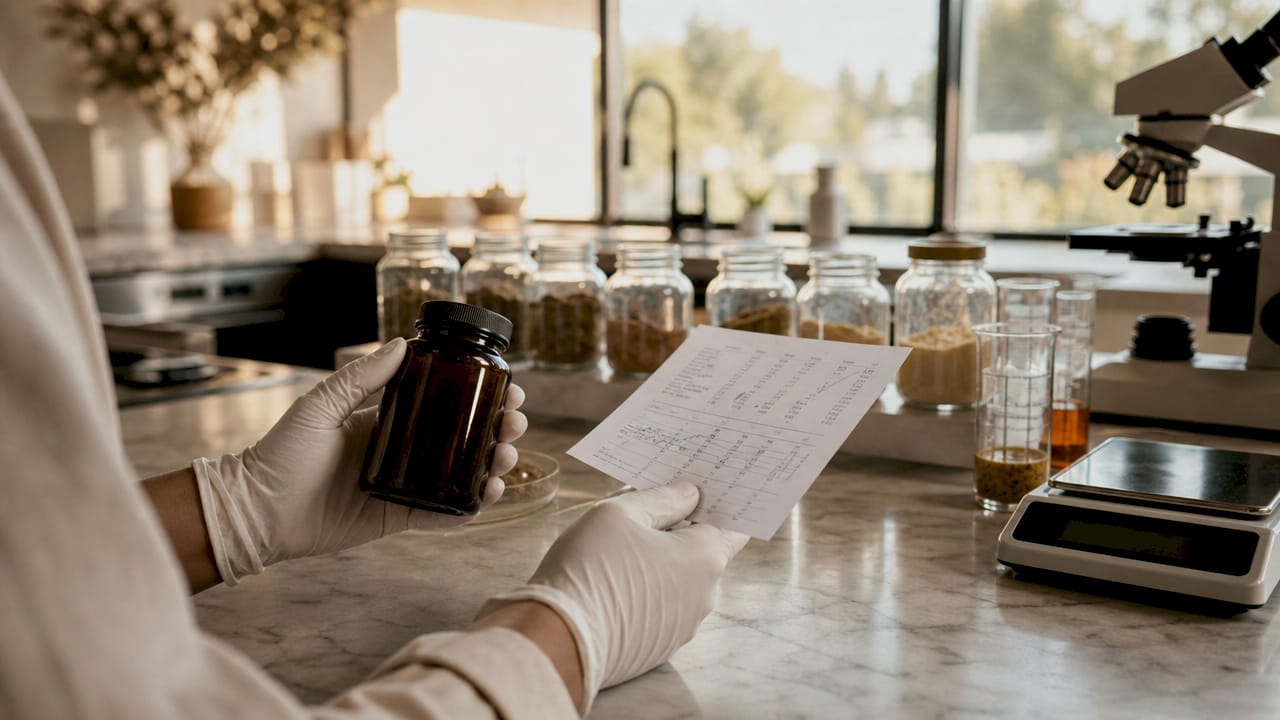
Reputable quality tested mushroom products screen for four heavy metals: lead, arsenic, mercury, and cadmium. Mushrooms are bioaccumulators, meaning they absorb compounds from their growing environment. That makes heavy metal screening non-negotiable, not optional.
Microbial testing covers pathogens like Salmonella, E. coli, and mold. Proper lab testing eliminates products that exceed safe thresholds before they reach you. A COA without microbial results is incomplete.
Potency verification centers on beta-glucan content. Beta-glucans are the active polysaccharides responsible for most of the immune and cognitive benefits attributed to functional mushrooms. A COA that lists beta-glucan percentage gives you a direct measure of whether the supplement will actually perform.
Pro Tip: Ask brands to share the COA for the specific lot number printed on your bottle. If they cannot provide it, that is your answer.
2. Fruiting body vs. mycelium on grain
This distinction is the most misunderstood issue in the mushroom supplement market. Fruiting body extracts come from the actual mushroom cap and stem. Mycelium on grain products grow fungal mycelium on rice or oats, then grind the entire substrate, starch included.
Fruiting body extracts contain significantly more bioactive compounds than mycelium on grain alternatives. The grain substrate inflates starch content and dilutes potency. A COA that shows high starch and low beta-glucan percentages signals a mycelium on grain product, regardless of what the label claims.
Look for "100% fruiting body extract" on the label and confirm it in the COA. Starch percentage below 5% and beta-glucan content above 20% are markers of a genuine, concentrated extract. Products that list only "mycelium" without specifying the substrate are worth scrutinizing carefully.
3. How to read a mushroom supplement COA
A Certificate of Analysis is a lab document, not a marketing sheet. Reading it correctly takes about two minutes once you know what to look for.
The lot number on the COA must match the lot number printed on your product. This is the single most important check. Batch-to-batch variability is real, and a COA from a different batch tells you nothing about what you are holding.
| COA Parameter | What It Measures | Acceptable Range |
|---|---|---|
| Beta-glucan content | Active potency | Above 20% for extracts |
| Starch content | Filler/substrate indicator | Below 5% for fruiting body |
| Lead | Heavy metal safety | Below 0.5 mcg per serving |
| Arsenic | Heavy metal safety | Below 10 mcg per day |
| Salmonella | Microbial safety | Not detected |
| E. coli | Microbial safety | Not detected |
| Mold/yeast | Microbial safety | Within USP limits |
Interpreting the results is straightforward. "Not detected" for pathogens is the only acceptable result. Heavy metal values should fall below established safe thresholds. Any COA that omits beta-glucan testing is not verifying potency at all.
Pro Tip: Download the COA as a PDF and search for "starch" and "beta-glucan" before reading anything else. Those two numbers tell you most of what you need to know about extraction quality.
4. The seven functional mushrooms worth knowing
Common functional mushrooms in supplements include lion's mane, reishi, turkey tail, cordyceps, chaga, shiitake, and maitake. Each carries a distinct profile of active compounds and a different body of research supporting its use.
- Lion's mane contains hericenones and erinacines, compounds studied for nerve growth factor stimulation and cognitive support.
- Reishi is rich in triterpenes and beta-glucans, with research focused on immune modulation and stress adaptation.
- Turkey tail contains polysaccharopeptide (PSP) and polysaccharide-K (PSK), both studied extensively for immune function.
- Cordyceps is associated with ATP production and oxygen utilization, making it popular in energy-focused formulas.
- Chaga delivers a high concentration of antioxidants, particularly betulinic acid and melanin pigments.
- Shiitake provides lentinan, a beta-glucan with well-documented immune-supporting properties.
- Maitake contains D-fraction polysaccharides linked to immune cell activation.
Functional mushrooms are generally recognized as safe for food use. Scientific support for therapeutic claims is still developing, and most research is preliminary or conducted in animal models. Products containing psilocybin or other controlled compounds are not functional mushrooms. They are a legally and pharmacologically separate category.
5. Certifications that support third-party testing claims
Third-party lab testing and manufacturing certifications are different things. Both matter, and confusing them is a common mistake.
GMP (Good Manufacturing Practice) certification, issued by the FDA or NSF International, confirms that a facility follows consistent production standards. It does not verify the potency or purity of a specific product batch. USP (United States Pharmacopeia) verification goes further, confirming that a product meets specific standards for identity, strength, and purity.
NSF Certified for Sport is the most rigorous certification for supplement safety, screening for over 270 substances. For mushroom extract supplements not marketed to athletes, GMP plus batch-specific COAs from an ISO-accredited lab is the practical gold standard.
Leading brands in 2026 proactively publish detailed lab reports online. That transparency is now a baseline expectation, not a premium feature. If a brand's website has no publicly accessible COAs, treat that as a quality signal.
6. How to choose the best mushroom supplements for your goals
Selecting the right product starts with matching the mushroom type to your wellness goal. Lion's mane suits cognitive support. Reishi and turkey tail are the strongest choices for immune function. Cordyceps fits energy and endurance goals. A mushroom complex supplement covering multiple species addresses several systems at once.
- Prioritize products listing fruiting body extracts with verified beta-glucan levels.
- Confirm the COA is batch-specific and publicly accessible on the brand's website.
- Check for GMP certification as a baseline manufacturing standard.
- Start with the manufacturer's standard dose and give the product 4–8 weeks before evaluating results.
- Consult a healthcare provider before combining multiple mushroom supplements, especially if you take immunosuppressants or blood thinners.
Capsules and powders differ in bioavailability and convenience. Powders dissolve in water or coffee and allow flexible dosing. Capsules offer precise, consistent doses with no preparation. Liquid drops, like mushroom cognition drops, absorb quickly and suit people who prefer not to swallow capsules.
Storage matters more than most people realize. Heat and moisture degrade beta-glucans over time. Keep supplements in a cool, dry place and away from direct sunlight. Check the expiration date against the COA date to confirm the product is within its tested window.
7. Red flags that signal a low-quality mushroom supplement
Knowing what to avoid is as useful as knowing what to seek. Several patterns consistently appear in low-quality mushroom products.
Proprietary blends that list multiple mushrooms without individual dosages make it impossible to know whether any single ingredient is present at a meaningful level. A product listing "mushroom blend 500 mg" with ten species inside likely contains trace amounts of most of them.
Labels that say "mycelium" without specifying the substrate are almost always mycelium on grain products. The absence of beta-glucan content on the label, or on the COA, means potency is unverified. Brands that claim "full spectrum" without a COA to back it up are using marketing language with no scientific anchor.
Price alone is not a reliable quality indicator. Some expensive products use mycelium on grain. Some mid-priced products offer genuine fruiting body extracts with full COA transparency. The COA is the only document that settles the question. Learning to identify clean supplements by their documentation is a skill that pays off every time you buy.
Key Takeaways
Third-party tested mushroom supplements are only as reliable as the batch-specific COA behind them. Verifying beta-glucan content, starch levels, and contaminant screening in that document is the most direct path to confident supplement selection.
| Point | Details |
|---|---|
| Batch-specific COAs are non-negotiable | Match the lot number on your bottle to the lab report before trusting any quality claim. |
| Fruiting body beats mycelium on grain | Look for beta-glucan above 20% and starch below 5% to confirm genuine extract quality. |
| FDA pre-market approval does not exist | Third-party testing is the only independent check on supplement safety and potency. |
| Certifications complement, not replace, COAs | GMP and NSF confirm manufacturing standards; only a COA confirms your specific batch. |
| Match mushroom type to your goal | Lion's mane for cognition, reishi and turkey tail for immunity, cordyceps for energy. |
The transparency gap no one talks about
The mushroom supplement market has grown faster than its quality controls. I have watched brands launch products with a single COA from their initial production run, then sell that same "verified" product for two years without retesting a single batch. That is not third-party testing. That is a marketing document.
The fruiting body versus mycelium on grain debate gets framed as a technical argument, but it is really a transparency argument. Brands using mycelium on grain know their starch content is high. They choose not to publish it. Brands using genuine fruiting body extracts publish their beta-glucan numbers because those numbers are the selling point.
ISO-accredited labs have made rigorous testing more accessible than ever. The cost of batch testing has dropped. The barrier is not technical or financial. It is a choice about whether a brand prioritizes your confidence or their margin. The brands publishing clean label supplement data are making a deliberate choice to be accountable.
My honest recommendation: treat any mushroom supplement without a publicly accessible, batch-specific COA as untested. The market has enough verified options that you never need to guess.
— Sacrahaus
Sacrahaus mushroom supplements: verified from batch to bottle
Sacrahaus formulates every mushroom supplement with ISO-accredited third-party lab testing and publishes batch-specific Certificates of Analysis so you can verify purity and potency before you open the bottle.
The vegan mushroom supplement collection covers immunity, cognition, and energy, with each formula built from fruiting body extracts and confirmed beta-glucan content. Products are non-GMO, made in the USA, and free from artificial fillers. Every batch is tested for heavy metals, microbial safety, and potency before it ships. If you want supplements backed by documentation you can actually read, Sacrahaus makes that documentation available on every product page.
FAQ
What does third-party tested mean for mushroom supplements?
Third-party tested means an independent, ISO-accredited laboratory has verified the product's purity, potency, and safety. The lab has no financial relationship with the brand, so its results are unbiased.
Are mushroom supplements safe to take daily?
Functional mushrooms like lion's mane, reishi, and turkey tail are generally recognized as safe for regular use. Consult a healthcare provider before daily use if you take immunosuppressants, blood thinners, or other medications.
How do I verify a mushroom supplement's COA is legitimate?
Match the lot number printed on your product to the lot number on the COA document. Confirm the testing lab is ISO-accredited and that the report includes beta-glucan content, heavy metal levels, and microbial results.
What is the difference between fruiting body and mycelium on grain?
Fruiting body extracts come from the actual mushroom and contain higher concentrations of beta-glucans. Mycelium on grain products include the starchy grain substrate, which dilutes potency and reduces the concentration of active compounds.
What beta-glucan percentage should I look for in a mushroom supplement?
A beta-glucan content above 20% in a fruiting body extract indicates a concentrated, potent product. Starch content below 5% confirms the product is not a mycelium on grain formula.