
TL;DR:
- Plant-based protein powders are extracted from plants like peas, rice, soy, and hemp, offering a cleaner protein source for various diets. Blended formulas provide complete amino acids, better taste, and digestion benefits, making them preferable over single-source powders. Choosing third-party tested products and meeting daily intake recommendations ensures optimal health and environmental advantages.
Plant-based protein powder is a concentrated protein supplement made by extracting and drying protein from plants such as peas, brown rice, hemp, and soy. If you are exploring a plant-forward diet or simply want a cleaner protein source, understanding what these powders actually contain matters more than the marketing on the label. This guide covers plant-based protein powder explained from the ground up: what it is, where it comes from, how it compares to animal protein, and how to use it effectively. Updated 2026 dietary recommendations now set protein intake at 1.2–1.6 g/kg body weight per day, making the right protein source a real nutritional decision.
What are the common sources and types of plant-based protein powders?
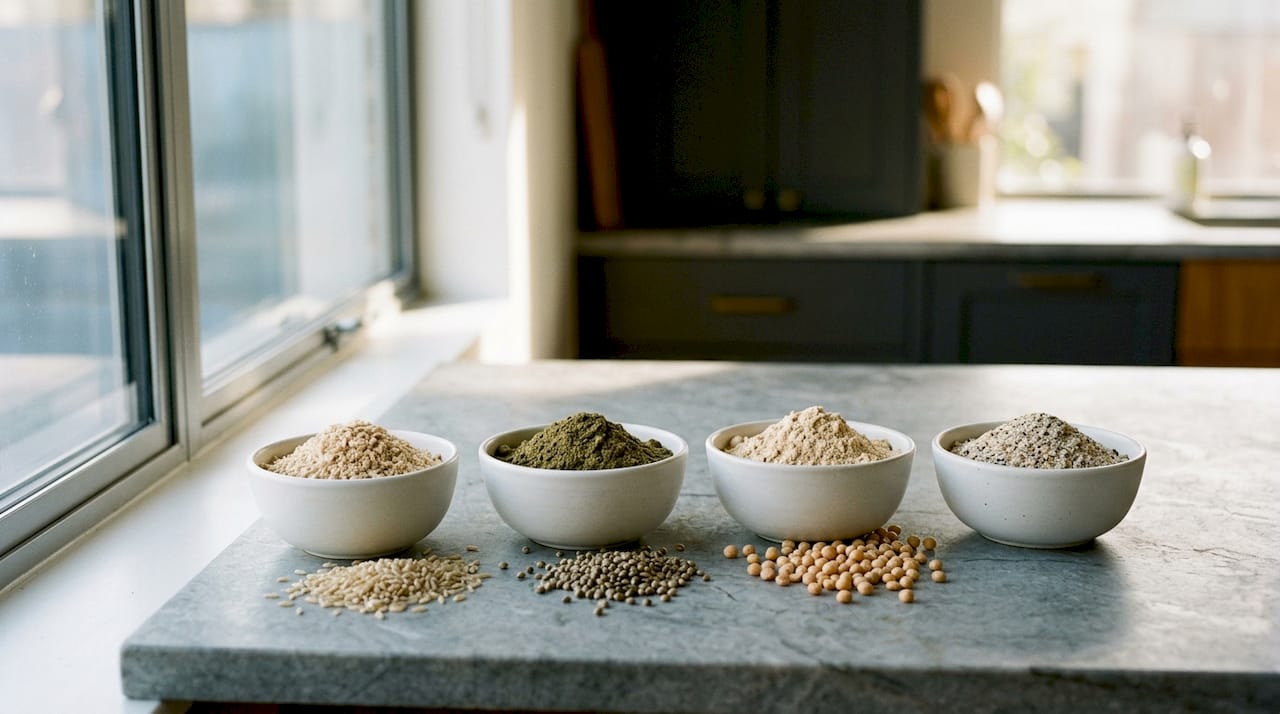
Plant protein powders draw from a wide range of botanical sources, and each one brings a different amino acid profile, texture, and flavor to the table.
The most common sources include:
- Pea protein: Derived from yellow split peas. High in branched-chain amino acids and one of the most digestible plant proteins available.
- Brown rice protein: Mild in flavor, easy on the stomach, but lower in lysine on its own.
- Soy protein: The only single-source plant protein considered nutritionally complete. Soy and pea proteins rank highest among plant options for amino acid completeness and digestibility.
- Hemp protein: Contains all essential amino acids plus omega-3 fatty acids. Lower in protein concentration but rich in fiber.
- Pumpkin seed and sunflower seed proteins: Increasingly popular in blended formulas for their mineral content and earthy flavor.
The concept of "complete" versus "incomplete" protein is central here. A complete protein contains all nine essential amino acids in adequate amounts. Most plant proteins fall short in at least one amino acid, typically lysine or methionine. The practical fix is blending. A pea and rice combination, for example, produces a complete amino acid profile with a PDCAAS score near 1.0, which is the benchmark used to compare protein quality. PDCAAS stands for Protein Digestibility Corrected Amino Acid Score, and DIAAS (Digestible Indispensable Amino Acid Score) is the newer, more precise metric. Single-source powders often score lower on both scales than blended formulas.
Flavor and texture vary significantly by source. Pea protein tends to be creamy and neutral. Hemp protein has a nuttier, earthier taste. Rice protein can feel slightly gritty on its own. Blended powders generally produce a smoother texture and more balanced flavor than any single source alone.
Pro Tip: Choose a blended pea-and-rice formula over a single-source powder. You get a complete amino acid profile, better texture, and more consistent nutrition without needing to mix multiple products yourself.
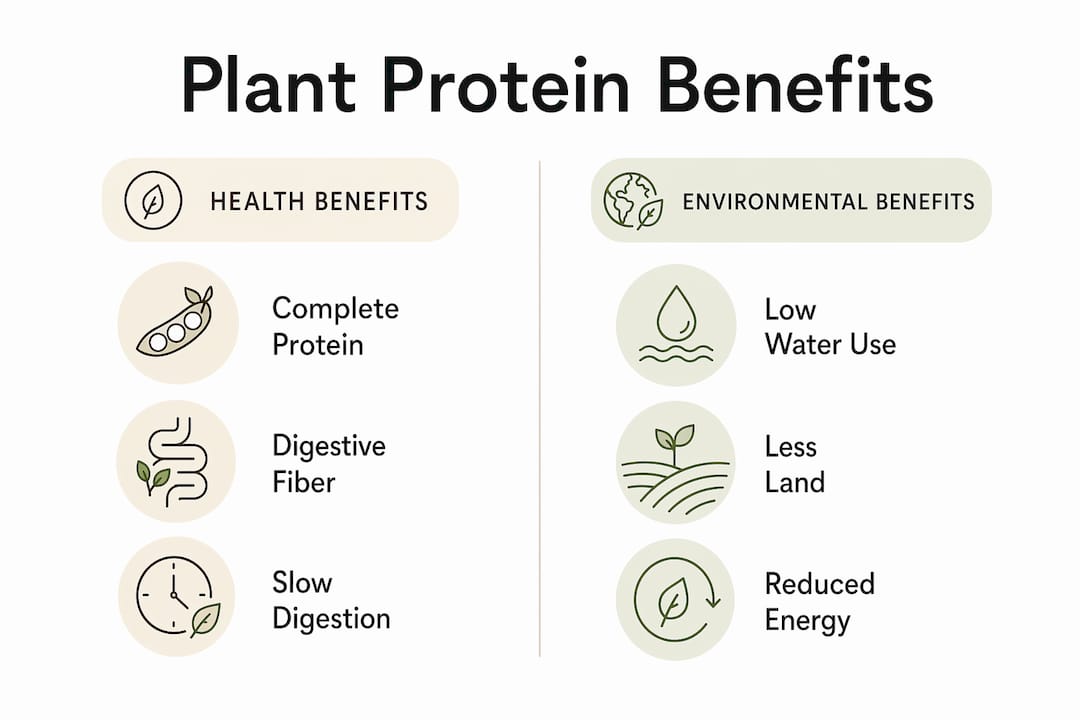
What are the health and environmental benefits of plant protein powder?
Plant-based protein powders deliver benefits that go well beyond simply hitting a daily protein number.
Key health advantages include:
- Lactose-free by nature: Plant powders contain no lactose and carry a cleaner ingredient profile than many dairy-based options, making them suitable for people with lactose intolerance or dairy allergies.
- Natural fiber content: Unlike whey, most plant proteins retain some fiber, which supports digestion and slows the absorption of nutrients.
- Anti-inflammatory properties: Hemp protein, in particular, contains gamma-linolenic acid, a fatty acid linked to reduced inflammation.
- Gut microbiota support: A 2026 review in Food & Function found that plant proteins regulate appetite hormones, improve lipid metabolism, and positively modulate gut bacteria. That means the benefits extend well beyond muscle repair.
The fiber content in plant protein powders also slows digestion. Plant proteins digest more slowly than whey, which promotes longer satiety and helps with calorie management. For anyone trying to maintain a healthy weight while meeting protein goals, this is a meaningful functional difference.
From an environmental standpoint, plant proteins require significantly less water, land, and energy to produce than animal-based proteins. Choosing plant-based sources reduces your dietary carbon footprint without sacrificing nutritional quality when you choose well-formulated products.
The 2026 updated dietary guidelines also push toward higher protein intake and plant-forward eating patterns. Plant protein powders fit naturally into that framework, especially when paired with whole foods that add phytochemicals and micronutrients. The combination of protein, fiber, and phytochemicals found in plant-based powders produces cardiometabolic benefits that animal proteins simply do not replicate.
How should you choose and use plant protein powders effectively?
Choosing the right product starts with reading the label critically, not the front panel.
- Check protein content per serving. Look for at least 20 grams of protein per serving. Anything significantly lower suggests heavy filler use.
- Verify amino acid completeness. If the label lists a single source like rice protein only, look for added leucine or a complementary protein blend.
- Scan the ingredient list. Shorter is better. Avoid products with artificial sweeteners, excessive gums, or proprietary blends that hide individual ingredient amounts.
- Start with a half serving. New users sometimes experience bloating or gas when switching to plant protein. Starting at half the recommended dose for the first week lets your digestive system adjust.
- Increase gradually. Move to a full serving after one to two weeks once tolerance is confirmed.
- Choose third-party tested products. Certification from organizations like NSF International or Informed Sport confirms that what is on the label is actually in the product, and that no banned substances or heavy metals are present at harmful levels.
Timing matters less than total daily intake for most people. Post-workout consumption supports muscle recovery, but a mid-day shake or a powder blended into oatmeal works equally well for general health goals. Total daily protein intake is more important than protein type for recreational exercisers, provided the protein quality is high.
Plant protein powders are supplements, not meal replacements. Pair them with whole foods like fruits, leafy greens, or dairy-free yogurt to add vitamins, minerals, and phytochemicals that no powder alone provides.
Pro Tip: Blend your plant protein powder into a smoothie with frozen berries, spinach, and a tablespoon of almond butter. You get complete protein, antioxidants, healthy fats, and fiber in one meal-sized drink.
What are the nutritional differences compared to animal-based proteins?
Plant and animal proteins differ in three key areas: digestibility, leucine content, and anabolic response.
| Metric | Plant protein | Animal protein |
|---|---|---|
| Digestibility (DIAAS) | Moderate (0.6–0.9 for most sources) | High (0.9–1.2 for whey, egg) |
| Leucine content | Lower in most single-source options | Higher per gram |
| Digestion speed | Slower due to fiber | Faster absorption |
| Lactose content | None | Present in whey and casein |
| Environmental impact | Lower | Higher |
Leucine is the amino acid that triggers muscle protein synthesis. Many plant proteins contain less leucine per gram than whey, which is why leucine fortification or larger serving sizes are sometimes recommended, particularly for people focused on building muscle. This is not a dealbreaker. It means plant protein users may need slightly more total protein per day to achieve the same anabolic stimulus.
Age changes the equation. Animal proteins are more anabolic per gram in older adults, who face a condition called anabolic resistance, where muscle responds less efficiently to protein. Older adults using plant proteins benefit from higher doses and amino acid-optimized blends. Younger adults, by contrast, can match whey's muscle-building effects with well-formulated plant blends and sufficient total intake.
Optimizing plant protein intake involves three levers: higher dosing, amino acid fortification, and strategic blending. None of these require exotic products. A quality pea-rice blend at 1.4–1.6 g/kg body weight per day covers the bases for most active adults.
The marketing around plant protein is noisy. Many products claim superiority without evidence. The honest answer is that for recreational exercisers with adequate total protein intake, performance differences between plant and whey protein are minimal. The choice comes down to digestion tolerance, dietary values, and consistency.
Key Takeaways
Plant-based protein powder delivers complete nutrition, digestive benefits, and environmental advantages when you choose blended, third-party tested formulas and meet the 2026 recommended intake of 1.2–1.6 g/kg body weight daily.
| Point | Details |
|---|---|
| Choose blended formulas | Pea-and-rice blends achieve a complete amino acid profile with a PDCAAS near 1.0. |
| Meet updated protein targets | The 2026 recommendation is 1.2–1.6 g/kg body weight, higher than the previous standard. |
| Prioritize third-party testing | NSF or Informed Sport certification confirms purity and accurate labeling. |
| Total intake beats timing | Daily protein volume matters more than when you consume it for most active adults. |
| Pair with whole foods | Adding fruits, greens, or dairy-free yogurt fills micronutrient gaps no powder covers alone. |
What I've learned from years of working with plant-based nutrition
The most common mistake people make with plant protein is treating it like a direct swap for whey. It is not a one-to-one replacement. It is a different tool that works differently in your body, and that difference is worth respecting.
What I have found consistently is that digestion tolerance is the real deciding factor for most people. Someone who switches from whey to a quality pea-rice blend and feels better within two weeks has found their answer. No amount of leucine data changes that lived experience. The choice between protein sources is highly individual, and consistency with a product you tolerate well will always outperform the theoretically superior option you dread taking.
Plant protein powders have improved dramatically in taste and formulation as of 2026. The chalky, gritty textures of earlier products are largely gone from quality brands. If you tried plant protein years ago and disliked it, the current generation of blended formulas is worth revisiting.
My practical advice: start with a blended powder, pair it with real food, and give your body three to four weeks to adapt. Experiment with timing and recipes. The vegan supplement powders that work best are the ones you actually use every day, not the ones with the most impressive label claims.
— Sacrahaus
Plant protein made practical with Sacrahaus
Sacrahaus formulates its vegan essentials with the same principles this article covers: clean ingredients, no unnecessary additives, third-party tested, and made in the USA. Every product in the Sacrahaus lineup is non-GMO and built for people who treat their supplement routine as a daily ritual, not an afterthought.

If you are ready to move from reading about plant protein to actually using it, the Sacrahaus vegan supplement powders collection pairs well with the whole-food approach outlined here. From green superfoods to functional blends, each product is designed to complement a nutrient-dense, plant-forward diet. Free worldwide shipping and automatic discounts make it easy to build a consistent routine without friction.
FAQ
What is plant-based protein powder?
Plant-based protein powder is a concentrated protein supplement extracted and dried from plant sources such as peas, brown rice, soy, or hemp. It provides essential amino acids to support muscle repair, satiety, and overall health.
Is plant protein powder as effective as whey for building muscle?
For recreational exercisers with sufficient total daily protein intake, plant protein can match whey's muscle-building effects. Well-formulated blends with adequate leucine close most of the gap between plant and animal protein.
Which plant protein source is the most complete?
Soy protein is the only single-source plant protein considered nutritionally complete. Pea-and-rice blends also achieve a complete amino acid profile with a PDCAAS score near 1.0, making them a strong alternative to soy.
How much plant protein powder should I take per day?
The 2026 updated recommendation sets protein intake at 1.2–1.6 g/kg of body weight per day for healthy adults. Your powder intake should contribute to that total alongside protein from whole food sources.
Can plant protein powder cause digestive issues?
Some people experience bloating when first switching to plant protein. Starting with a half serving for one to two weeks allows your digestive system to adjust. People with lactose intolerance often find plant protein easier to digest than whey within two to four weeks of switching.