
TL;DR:
- USA-made supplements are generally safer and more transparent due to strict quality oversight and domestic manufacturing standards. Most use imported ingredients but are formulated in US facilities that comply with cGMP and FDA regulations, ensuring consistent quality and traceability. Verifying legitimacy involves checking third-party certifications, FDA registration, and qualified origin claims on labels.
USA-made supplement benefits are defined by three concrete advantages: stricter quality oversight, clearer ingredient transparency, and ethical manufacturing standards that imported products rarely match. The U.S. supplement market operates under FDA registration requirements and current Good Manufacturing Practice (cGMP) standards that set a measurable floor for product safety. 70–80% of American consumers strongly prefer domestically produced supplements, with safety concerns about imports driving that preference. That number reflects a real shift in how health-conscious people evaluate what they put in their bodies.
1. What "Made in USA" legally means for supplements
The Federal Trade Commission defines a "Made in USA" claim as requiring that "all or virtually all" of the product's parts and processing occur domestically. That standard is stricter than most people assume. Executive Order 14392 mandates enforcement of this rule with FTC oversight, making unsubstantiated origin claims a legal liability in 2026.
Supplements present a specific challenge. Most raw botanical and mineral ingredients are sourced globally, which means a product assembled in the U.S. may not legally qualify for an unqualified "Made in USA" label. The FTC requires that qualified claims be clear, substantiated, and accompanied by prominent disclosures when complete domestic sourcing is not possible.
What this means for you as a consumer: the label alone is not enough. You need to look for qualified language that specifies exactly what was done domestically.
- Unqualified claim: "Made in USA" (requires all or virtually all domestic content)
- Qualified claim: "Manufactured in a US cGMP facility" (legally safer, more accurate for most brands)
- Red flag: No facility information, no certifications, no third-party testing disclosure
Pro Tip: Search the FDA's dietary supplement facility registration database to verify whether a brand's manufacturing facility is actually registered in the United States.
2. How domestic manufacturing delivers superior quality
FDA registration and cGMP certification are the two credentials that separate reliable domestic manufacturers from unverified ones. Domestic FDA-registered, cGMP-certified facilities provide batch traceability, consistent formulation, and documented quality control at every production stage. That traceability means if a contamination issue arises, the source can be identified and addressed quickly.
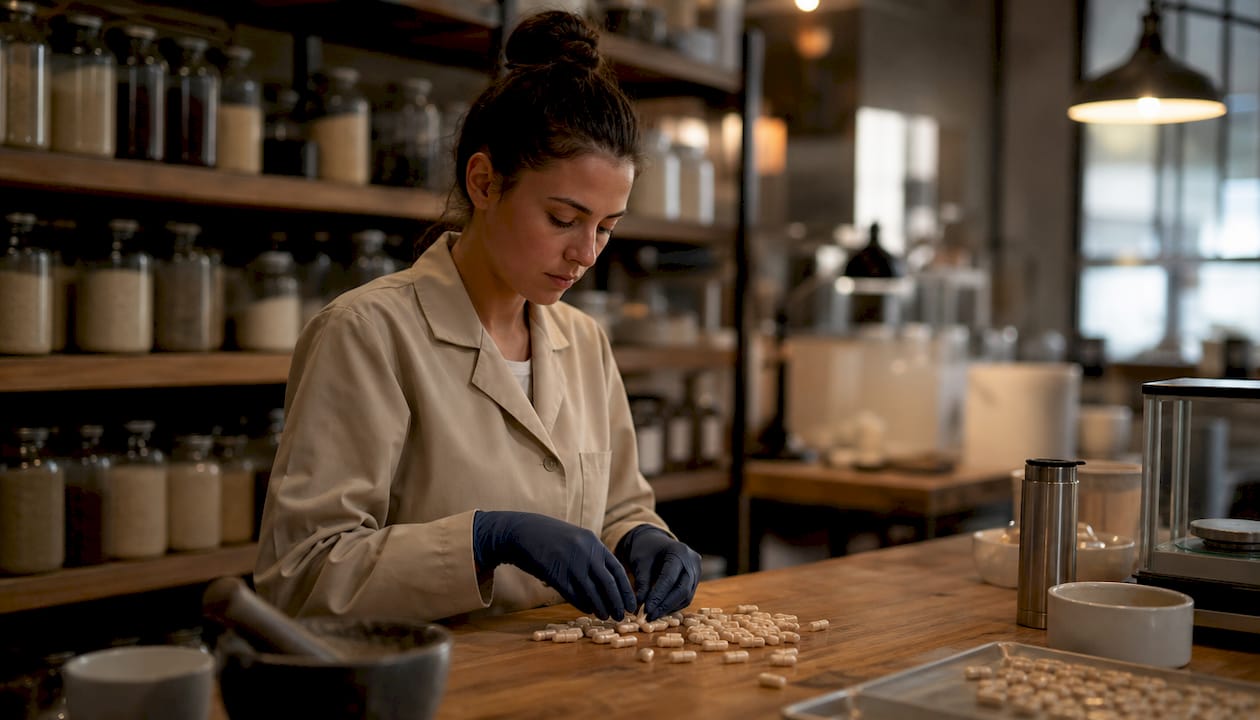
cGMP standards require manufacturers to test raw materials, in-process materials, and finished products. They also require written procedures, equipment calibration records, and trained personnel. These requirements do not exist in the same form in many countries that export supplements to the U.S. market.
Domestic oversight also means faster regulatory response. When the FDA issues a warning or recall, U.S.-based manufacturers are subject to inspection and must comply immediately. Imported products face longer response chains and less direct accountability.
- Batch traceability: Every lot number links back to raw material testing records
- Formulation consistency: cGMP requires validated processes that produce the same product every run
- Contamination control: Domestic facilities face regular FDA inspections and must maintain documented sanitation protocols
- Label accuracy: cGMP mandates that what is on the label matches what is in the bottle
Pro Tip: Ask brands directly for their Certificate of Analysis (COA) for each product batch. Legitimate USA-based manufacturers produce these routinely and should share them on request.
3. Supply chain advantages of American-made supplements
Domestic production removes several layers of risk that global supply chains introduce. Shorter lead times from no international shipping delays allow brands to reorder, reformulate, and respond to demand faster than competitors relying on overseas logistics. That speed translates directly into fresher product on shelves and faster access to new formulations for consumers.
Geopolitical disruptions, port congestion, and shifting trade policies all create volatility in global ingredient supply chains. Domestic manufacturing avoids tariffs and reduces exposure to these risks, making the total cost of production more predictable. When tariff pressures rise on imported goods, U.S.-made products hold a structural cost advantage.
The supply chain benefits break down into four practical areas:
- No international shipping delays. Domestic logistics move faster and with fewer points of failure than ocean freight.
- Tariff insulation. Products manufactured in the U.S. are not subject to import duties that can raise landed costs unpredictably.
- Faster innovation cycles. Brands working with domestic contract manufacturers can iterate on formulas in weeks rather than months.
- Geopolitical stability. Trade disputes, export restrictions, and foreign regulatory changes do not disrupt domestic production lines.
For health-conscious consumers, this matters because supply chain stability directly affects product availability and shelf life. A supplement that runs out of stock for six months due to overseas shipping delays is not a reliable part of your wellness routine.
4. Ingredient transparency and what it actually means
Most supplements labeled "Made in USA" use imported raw ingredients, with final formulation and packaging completed domestically. This is the most common misconception about American-made dietary supplements. Understanding this distinction helps you ask better questions and read labels more accurately.
Transparency in this context means two things: honest labeling about where manufacturing steps occur, and clear disclosure of ingredient origins when they are known. Brands that avoid unqualified "Made in USA" claims and instead use qualified language are actually demonstrating more integrity, not less. They are telling you exactly what they control.
Ethical sourcing adds another layer. Domestic manufacturing facilities operate under U.S. labor laws, environmental regulations, and workplace safety standards. That means the people making your supplements work in regulated conditions. Many overseas facilities operate under no equivalent protections.
- Clean label practice: Full ingredient disclosure with no proprietary blends that hide dosages
- Qualified origin claims: Specific language about which steps occur domestically
- Ethical workforce standards: U.S. labor law compliance versus unverified overseas conditions
- Environmental compliance: EPA regulations apply to domestic facilities; overseas equivalents vary widely
| Transparency factor | USA-based manufacturing | Unverified import |
|---|---|---|
| Facility inspection | FDA-regulated, documented | Varies by country |
| Labor standards | U.S. law applies | Not guaranteed |
| Batch traceability | Required under cGMP | Not standardized |
| Label accuracy | cGMP-mandated | Self-reported |
Learning to identify clean ingredient supplements starts with understanding which manufacturing steps a brand actually controls and which it discloses.
5. How to verify a USA-made supplement before you buy
Quality verification requires more than reading the front of the label. The back panel, the brand's website, and third-party databases all provide signals that a front-of-pack claim cannot. Third-party certifications like NSF Certified or USP Verified build more credibility than origin claims alone. These programs test finished products independently and confirm that what is on the label is actually in the bottle.
Facility audits and FDA inspection reports are publicly accessible. The FDA publishes warning letters and inspection findings online. Checking whether a brand's manufacturer has received recent warning letters takes less than five minutes and can reveal serious quality failures that marketing materials will never mention.
Qualified label language is a positive signal, not a weakness. A brand that says "Formulated and manufactured in a US cGMP-registered facility" is being precise. A brand that says only "Made in USA" on a product with 15 botanical ingredients sourced from five continents may be overstating its domestic content.
- Look for: NSF Certified, USP Verified, Informed Sport, or equivalent third-party seals
- Check: FDA dietary supplement facility registration database for the manufacturer's name
- Read: The full label for qualified versus absolute origin claims
- Ask: Whether the brand publishes Certificates of Analysis for each product batch
Pro Tip: The clean label transparency standard goes beyond origin claims. Look for brands that disclose ingredient sources, testing protocols, and facility certifications in one place.
Key takeaways
USA-made supplement benefits are most reliable when domestic manufacturing is paired with third-party testing, qualified label claims, and documented cGMP compliance.
| Point | Details |
|---|---|
| Legal standard matters | "Made in USA" requires all or virtually all domestic content under FTC rules. |
| cGMP is the quality floor | FDA-registered, cGMP-certified facilities provide batch traceability and consistent formulation. |
| Supply chain stability | Domestic production removes tariff exposure and international shipping delays. |
| Ingredient origin is separate | Most USA-made supplements use globally sourced ingredients; final processing is domestic. |
| Third-party testing wins | NSF, USP, or equivalent certifications verify label accuracy beyond origin claims alone. |
Why the "Made in USA" label is more complicated than it looks
The supplement industry is at an inflection point. Executive Order 14392 and tightening FTC enforcement are forcing brands to either substantiate their domestic claims or walk them back. That pressure is good for consumers who pay attention. It is bad for brands that have been coasting on vague patriotic marketing without the manufacturing credentials to back it up.
What I have seen consistently is that the brands worth trusting are the ones that lean into qualified claims rather than absolute ones. They say "manufactured in a US cGMP facility" because that is what they actually control. They publish their COAs. They name their certifications. They do not hide behind a flag on the label.
The 2026 regulatory environment rewards that kind of precision. Brands with verifiable USA-made claims now hold a real competitive advantage in a market where consumers are increasingly skeptical. That skepticism is healthy. It pushes the entire industry toward better documentation and more honest communication.
My honest recommendation: stop treating "Made in USA" as a binary. Ask where the ingredients come from, where they are tested, and what certifications the facility holds. The brands that answer those questions clearly are the ones earning your trust and your money.
— Sacrahaus
Sacrahaus: USA-made, third-party tested, and clean by design
Sacrahaus formulates every product in an FDA-registered, cGMP-certified facility in the United States. Every formula is third-party tested, non-GMO, and built without proprietary blends that hide what you are actually taking. The Sacrahaus manufacturing process covers full batch traceability, qualified ingredient sourcing, and documented quality control at every stage.

The vegan supplement collection includes adaptogens, botanicals, functional powders, and gummies designed for real wellness routines, not marketing shelves. Each product reflects the same commitment to clean labels and honest origin claims that this article describes. If you want supplements that meet the standard rather than just claim it, that is where to start.
FAQ
What are the main benefits of USA-made supplements?
USA-made supplement benefits include stricter quality oversight through FDA registration and cGMP standards, faster supply chain response, and greater accountability through domestic regulatory enforcement. Third-party testing adds an additional layer of verification beyond the origin claim itself.
Does "Made in USA" mean all ingredients are American?
No. Most supplements labeled "Made in USA" use globally sourced raw ingredients, with final formulation and packaging completed domestically. The FTC's "all or virtually all" standard applies to the whole product, which is why qualified claims like "manufactured in a US cGMP facility" are more accurate for most brands.
How do I verify a supplement is genuinely USA-made?
Check the FDA's dietary supplement facility registration database for the manufacturer's name, look for third-party certifications like NSF Certified or USP Verified, and request a Certificate of Analysis for the specific product batch.
What is a qualified "Made in USA" claim?
A qualified claim specifies exactly which manufacturing steps occurred domestically, such as "formulated and packaged in a US cGMP-registered facility." This language is legally safer than an absolute claim and more transparent about what the brand actually controls.
Why does cGMP certification matter for supplement quality?
cGMP certification requires manufacturers to test raw materials and finished products, maintain written procedures, and document every production step. These requirements produce consistent formulations and traceable batches, which are the two most direct indicators of product reliability.