
TL;DR:
- Vegan supplements target nutrients that plants cannot provide efficiently, such as vitamin B12, vitamin D, and omega-3s. Choosing products with third-party certification and bioavailable forms ensures effectiveness. Regular blood testing and targeted supplements help vegans optimize their long-term health.
A vegan supplement is a dietary product made exclusively from plant-based ingredients, formulated to fill nutritional gaps that a vegan diet alone may not cover. These products contain no animal-derived substances, including no gelatin capsules, no lanolin-sourced vitamin D3, and no fish-based omega-3s. The Academy of Nutrition and Dietetics recognizes that well-planned vegan diets can meet most nutritional needs, yet specific nutrients like vitamin B12, vitamin D, and long-chain omega-3s remain genuinely difficult to obtain from plants. Understanding what a vegan supplement is, and which ones you actually need, is the first step toward building a plant-based lifestyle that supports your long-term health.
What nutrients do vegan supplements typically target?
Vegan dietary supplements exist because several critical nutrients are either absent from plants or poorly absorbed from plant sources. Knowing which ones matter most helps you avoid buying products you do not need.
Vitamin B12 tops every list for good reason. B12 is absent in unfortified plant foods, and deficiency leads to anemia and irreversible nerve damage. No amount of nutritional yeast or fortified cereal reliably replaces a dedicated B12 supplement for most people on a fully vegan diet.
Vitamin D presents a similar challenge. Your skin synthesizes it from sunlight, but cloud cover, sunscreen, skin tone, and indoor lifestyles all reduce production. Most vitamin D3 in standard supplements comes from lanolin, a sheep-derived wax. Vegan D3 is derived from lichen, making it a genuinely animal-free alternative.
Long-chain omega-3s (EPA and DHA) are where plant-based nutrition has a structural weakness. Flaxseeds and walnuts provide ALA, a short-chain omega-3, but ALA converts inefficiently to the DHA and EPA your brain and cardiovascular system actually use. Algae-derived omega-3 supplements bypass this conversion problem entirely, since algae is the original source that fish accumulate DHA from anyway.
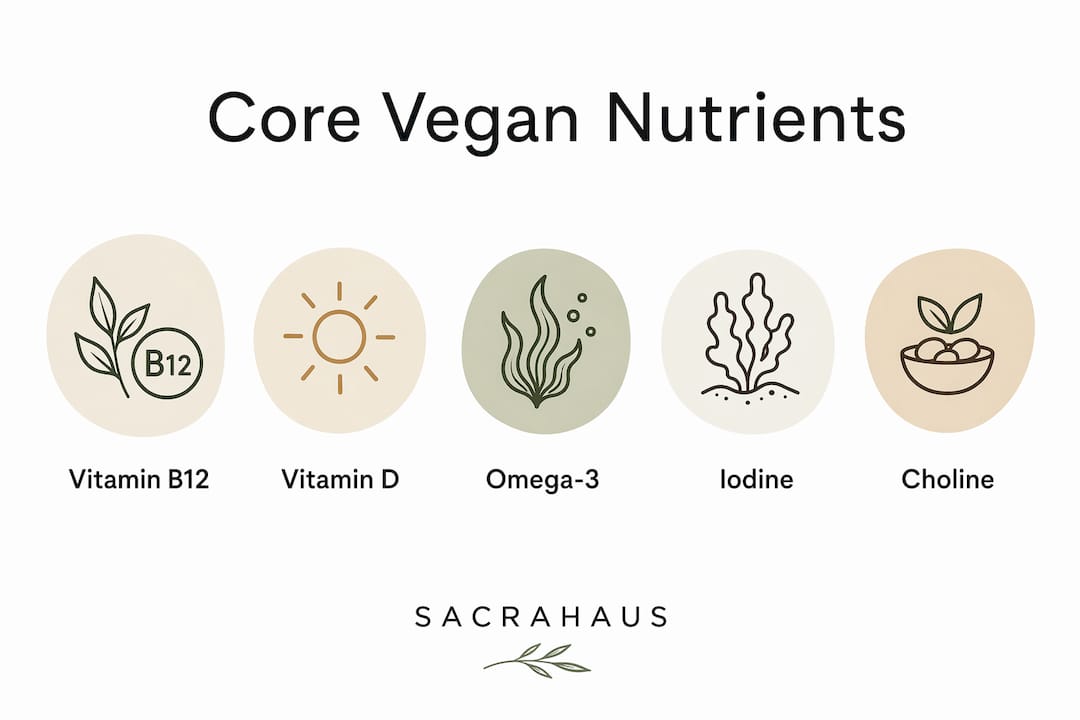
Beyond these three, vegan diets are also linked with increased risk of low vitamin B2, vitamin A, iodine, and choline status. That finding matters because most people focus only on B12 and D, leaving these secondary gaps unaddressed.
Here is a quick reference for the nutrients most commonly targeted by plant-based nutrition supplements:
| Nutrient | Why vegans need it | Best vegan source |
|---|---|---|
| Vitamin B12 | Absent in unfortified plants | Cyanocobalamin or methylcobalamin supplement |
| Vitamin D3 | Sunlight-dependent; D3 usually from lanolin | Lichen-derived D3 supplement |
| EPA and DHA | ALA converts poorly to these forms | Algae oil supplement |
| Iodine | Low in most plant foods | Kelp or iodine supplement |
| Vitamin A (retinol) | Beta-carotene conversion varies by genetics | Retinol supplement for some individuals |
| Choline | Low in typical vegan diets | Targeted choline supplement |
Pro Tip: Genetic variation affects how well your body converts beta-carotene into vitamin A. If you eat plenty of orange and yellow vegetables but still feel fatigued, ask your doctor to test your retinol levels specifically.
How to choose vegan supplements that actually work
Choosing effective vegan supplements requires more than reading the front label. The supplement industry is largely self-regulated, which means quality varies widely between products.

The first thing to check is certification. A certified vegan label confirms that no animal-derived ingredients or byproducts were used in the product or its manufacturing process. This matters because some capsule coatings, tablet binders, and even colorants are animal-derived without being obvious on the label.
Third-party testing is the second non-negotiable. Nutritionist Sharon Palmer recommends choosing supplements that carry USP or NSF certification, which independently verify that the product contains what it claims and nothing harmful. A supplement without third-party testing is essentially asking you to trust the manufacturer's own quality control.
The form of the nutrient matters as much as the dose. Methylcobalamin, one form of B12, is retained in the body more effectively than cyanocobalamin in some individuals. Vitamin D3 from lichen is better absorbed than D2 from ergocalciferol. These distinctions are not marketing language. They reflect real differences in how your body processes each compound.
Standard multivitamins are often a poor fit for vegans. Generic multis frequently overdose on vitamins C, E, and folate, which vegans typically get enough of from food, while under-delivering on B12 and vitamin D. A vegan-focused multi or a targeted single-nutrient approach is more effective than a one-size-fits-all formula.
Key things to look for when reading a supplement label:
- Certified vegan seal from a recognized body such as Vegan Action or The Vegan Society
- USP, NSF, or equivalent third-party testing certification
- Nutrient forms listed explicitly (methylcobalamin, not just "vitamin B12")
- No unnecessary fillers like magnesium stearate from animal sources or gelatin capsules
- Non-GMO verification and country of manufacture
Pro Tip: Look for clean ingredient transparency on the brand's website, not just the product label. Reputable brands publish their testing certificates and sourcing details publicly.
Are vegan supplements effective? What the research shows
Vegan supplements are effective when they are the right nutrient, in the right form, at the right dose. The evidence is clear on this point.
A controlled trial found that a 4-month multinutrient program including B12, vitamin D3, and omega-3s significantly improved blood biomarker status in healthy vegans. That result is significant because it demonstrates measurable change in actual blood levels, not just dietary intake estimates. Specifically, a supplement containing 82 µg of B12 per day raised B12 biomarkers in participants who had previously been deficient.
Dosing strategy for B12 is more nuanced than most people realize. Because B12 absorption relies on a protein called intrinsic factor, which saturates at low doses, taking a large dose once a week is less efficient than smaller daily doses. Research supports taking 1,000 mcg twice weekly as one effective approach when daily supplementation is not practical.
For omega-3s, experts recommend a daily intake of 1,000–1,500 mg of combined EPA and DHA, ideally in a 50:50 ratio, with blood level retesting after 4 months to confirm the supplement is working. That retesting step is one most people skip, but it is the only way to know your levels actually changed.
The goal of vegan supplementation is not just to avoid deficiency. It is to maintain the same biomarker status as someone eating an omnivorous diet, so that your long-term health outcomes are not compromised by your food choices.
A common misconception is that eating a "varied" vegan diet eliminates the need for supplements. It does not. B12 simply does not exist in meaningful amounts in any plant food, regardless of dietary variety. Vitamin D production depends on UV exposure, not diet. These are structural gaps, not gaps caused by poor meal planning.
Modern vegan nutrition moves beyond preventing deficiencies to optimizing health through strategic supplementation where diet alone is insufficient. That shift in thinking, from "avoid deficiency" to "optimize function," changes which supplements you prioritize and how you dose them.
How to integrate supplements into your plant-based lifestyle
Building a supplement routine that actually sticks requires matching your supplements to your real life, not an idealized version of it.
- Get baseline blood tests first. Blood testing for B12, vitamin D, and iron before you start supplementing tells you where your actual gaps are. Supplementing without testing means you may be spending money on nutrients you already have enough of, while missing the ones you genuinely need.
- Start with the non-negotiables. B12 and vitamin D are the two supplements that virtually every vegan needs. Add algae-based EPA and DHA as a strong third. These three address the most structurally unavoidable gaps in plant-based diets.
- Time your supplements strategically. Fat-soluble vitamins like D, A, and K absorb better when taken with a meal containing fat. B12 absorbs best on an empty stomach or with a small amount of food. Splitting doses across the day improves absorption for several nutrients.
- Combine supplements with fortified foods. Fortified plant milks, nutritional yeast, and fortified cereals contribute to your daily intake. Account for these sources when calculating your supplement dose to avoid accidental over-supplementation of nutrients like folic acid.
- Retest every 6–12 months. Your needs change with seasons, life stages, and health conditions. Pregnancy, breastfeeding, and older age all increase requirements for specific nutrients. Regular retesting keeps your routine calibrated to your actual biology.
Pro Tip: Pair your supplement routine with a consistent daily ritual, such as taking your supplements with breakfast, to build the habit without relying on willpower. Consistency matters more than perfection.
Special life stages deserve extra attention. Pregnant vegans need higher doses of iodine, choline, and DHA. Older adults absorb B12 less efficiently and often need higher doses or sublingual forms. Children on vegan diets need age-appropriate dosing, which differs significantly from adult recommendations.
Key Takeaways
Vegan supplements are most effective when they target specific structural nutrient gaps, use bioavailable forms, and are verified by third-party testing.
| Point | Details |
|---|---|
| B12 is non-negotiable | No plant food provides meaningful B12; supplementation is required for all vegans. |
| Form affects absorption | Choose methylcobalamin over cyanocobalamin and lichen-derived D3 over D2 for better results. |
| Third-party testing matters | USP or NSF certification confirms purity and potency that label claims alone cannot guarantee. |
| Test before you supplement | Blood tests for B12, D, and iron prevent unnecessary supplementation and reveal real gaps. |
| Algae oil replaces fish oil | Algae-derived EPA and DHA bypass the inefficient ALA conversion problem in plant-based diets. |
The case for targeted supplementation over broad-spectrum guessing
At Sacrahaus, we have spent years watching people approach vegan supplementation the wrong way. They buy a generic multivitamin, assume it covers everything, and then wonder why their energy or focus does not improve. The problem is almost always the same: the wrong product for the actual gap.
The supplement market has grown significantly, but consumer education has not kept pace. Most people still think "vegan supplement" means any supplement without animal products. The real distinction is whether the product addresses the specific nutrients that plant-based diets structurally cannot provide. That is a much shorter list than most brands want you to believe.
What we have found works is a targeted approach: identify your actual deficiencies through blood work, choose products with verified forms and doses, and build a consistent daily habit around them. Whole foods do the heavy lifting. Supplements handle the gaps that whole foods cannot close, no matter how well you eat.
The brands worth trusting are the ones that publish their third-party test results, name their ingredient sources, and do not pad their formulas with nutrients you already get from food. That level of transparency is not common, but it is the standard worth holding every product to.
— Sacrahaus
Sacrahaus vegan supplements: built for plant-based nutrition
Sacrahaus formulates every product specifically for the gaps that matter most in plant-based diets. Each supplement is third-party tested, non-GMO, and made in the USA, with ingredient sourcing and test results available for review.

The vegan essentials collection covers the core nutrients that research consistently identifies as most critical for vegans: iron, magnesium, creatine, greens, and minerals. For those who prefer powder formats, the vegan superfoods powder delivers a concentrated blend of plant-based nutrients in a single daily serving. Every formula is built around bioavailable nutrient forms, not the cheapest available versions. If you want to see the full range of plant-based supplements Sacrahaus offers, the collection page lists every product with full ingredient transparency.
FAQ
What is a vegan supplement made of?
A vegan supplement contains only plant-derived ingredients, with no animal byproducts in the active ingredients, capsule shells, or manufacturing process. Common sources include algae, lichen, mushrooms, and botanical extracts.
Do vegans really need supplements?
Vitamin B12 is absent in unfortified plant foods, making supplementation necessary for virtually all vegans. Vitamin D and algae-based omega-3s are also strongly recommended due to structural limitations in plant-based diets.
How do I know if a vegan supplement is high quality?
Look for a certified vegan seal alongside third-party testing certifications such as USP or NSF, which independently verify purity and potency. Also check that the label lists specific nutrient forms, not just generic vitamin names.
How much B12 should a vegan take?
One effective approach is 1,000 mcg twice weekly, as B12 absorption becomes less efficient at higher single doses due to intrinsic factor saturation. Daily lower-dose supplementation is also effective and may suit some people better.
Can I get enough omega-3s from flaxseeds alone?
Flaxseeds provide ALA, which converts inefficiently to the EPA and DHA your body needs. Algae-based omega-3 supplements are the recommended solution, with a target of 1,000–1,500 mg of combined EPA and DHA daily.