
TL;DR:
- Lab testing for supplements verifies product safety, ingredient accuracy, and purity before sale, filling a regulatory gap. Without third-party certification, consumers risk exposure to mislabeled products and contaminants, including harmful substances like heavy metals or banned drugs. Ongoing batch testing and reputable seals ensure consistent quality, helping consumers make informed health choices.
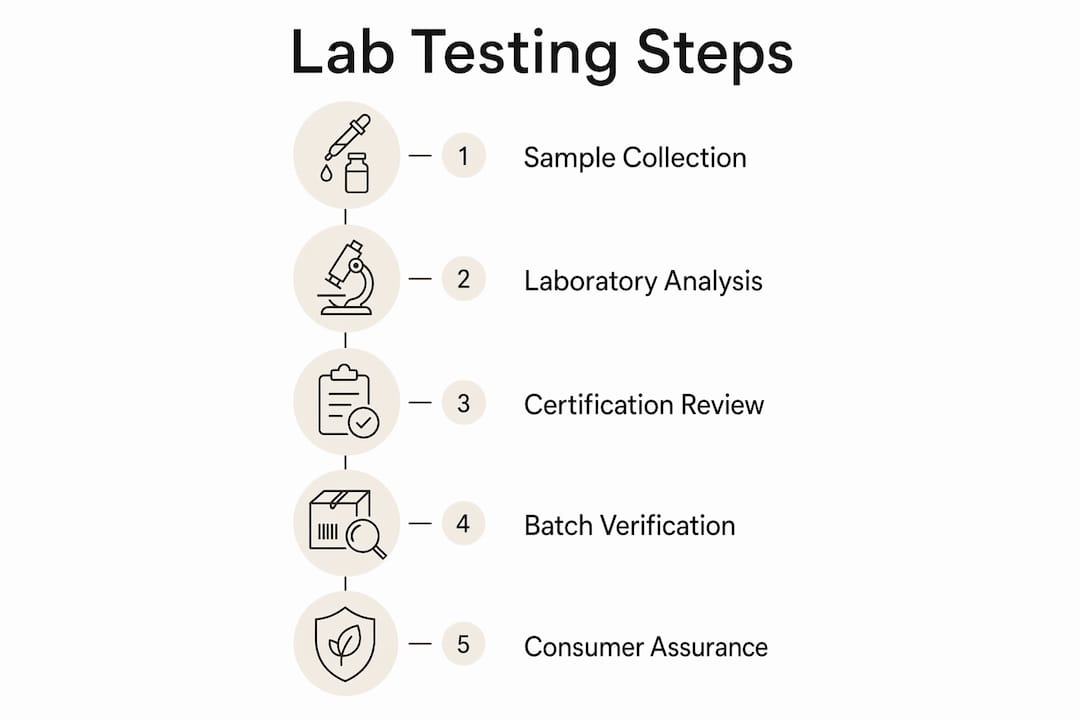
Lab testing for supplements is the independent laboratory analysis that confirms a product's safety, ingredient accuracy, and purity before it reaches you. This process, formally called third-party testing, fills a critical regulatory gap: unlike prescription drugs, dietary supplements do not require FDA pre-market approval before they go on sale. That means the manufacturer bears full responsibility for quality. Understanding why lab testing supplements matters is the first step toward making health choices you can actually trust.
Why lab testing supplements matters: the regulatory gap
The Dietary Supplement Health and Education Act of 1994 (DSHEA) classifies supplements as food, not drugs. That single classification means no government agency tests a supplement for safety or efficacy before it hits store shelves. Manufacturers can legally sell a product without proving it contains what the label claims.

Approximately 20–25% of dietary supplements fail basic quality checks, including label inaccuracies and contamination. One in four products you pick up may not deliver what it promises. That failure rate is not a fringe problem. It affects mainstream categories sold in pharmacies and health food stores alike.
Third-party testing exists precisely because this regulatory gap is real and wide. An independent lab with no financial stake in the product tests it against the label claims and screens for contaminants. The result is a certificate of analysis (COA) that either confirms or contradicts what the brand says. Without that external check, you are relying entirely on the manufacturer's word.
What is lab testing for supplements and how does it work?
Third-party testing is distinct from a brand testing its own products. First-party testing means the manufacturer runs the tests internally. Second-party testing means a retailer or partner tests the product. Third-party testing means an independent lab with no commercial relationship to the brand conducts the analysis. Only third-party testing carries meaningful credibility.
The tests themselves cover several categories:
- Label accuracy: Does the product contain the ingredients listed, at the stated doses?
- Potency: Are active compounds present at effective levels?
- Contaminants: Are heavy metals, pesticides, microbes, or solvents present above safe limits?
- Banned substances: Does the product contain stimulants, steroids, or other prohibited compounds?
Certification bodies like USP, NSF, ConsumerLab, and Informed Sport are the most credible independent quality markers in the industry. Each program has its own testing protocols and standards, but all four require products to pass rigorous analysis before earning a seal. Informed Sport, for example, uses methods equivalent to Olympic-level drug testing for banned substance screening.
Batch testing is a critical distinction most consumers miss. A one-time test confirms a single production run. Batch testing means every lot that ships to consumers gets tested independently. A product certified through batch testing offers far stronger assurance than one tested once at launch.
Pro Tip: When you see a certification seal on a label, visit the certifying body's website and search the product by name or lot number. USP and NSF both maintain searchable databases where you can verify batch-specific results before you buy.
What are the real risks of untested supplements?
The risks of skipping lab testing are not theoretical. Stimulants and anabolic-androgenic steroids are among the most common contaminants found in supplement products. These compounds do not appear on labels. Consumers taking them unknowingly face cardiovascular stress, hormonal disruption, and, for athletes, automatic disqualification from competition.
"Supplements with proprietary blends and vague 'lab tested' claims often hide underdosed ingredients and lack independent verification. Such marketing practices mislead consumers about product quality and efficacy."
Label inaccuracies create a different but equally serious problem. A supplement containing half the stated dose of vitamin D or magnesium simply will not produce the intended health effect. A product containing twice the stated dose of a fat-soluble vitamin can cause toxicity over time. Both scenarios are avoidable with proper testing.
Certain categories carry higher risk than others. NMN supplements, herbal blends, and pre-workout formulas show particularly high rates of content failures and mislabeling. These are also among the fastest-growing supplement categories, which means more consumers are exposed to the risk. If you take any of these, third-party certification is not optional. It is the minimum standard for responsible purchasing.
Heavy metal contamination is a separate concern, especially in plant-based and herbal products. Botanicals absorb minerals from soil, and without testing, there is no way to know whether a product contains safe levels of lead, arsenic, cadmium, or mercury. This is especially relevant for anyone taking supplements daily over months or years.
How to identify trustworthy lab-tested supplements
Reading a supplement label well is a skill. Most labels contain marketing language designed to sound reassuring without committing to anything verifiable. Here is how to cut through it.
- Look for a named certification seal. USP Verified, NSF Certified for Sport, ConsumerLab Approved, and Informed Sport are the four programs with genuine credibility. A generic "lab tested" claim with no named certifier means nothing.
- Request or download the certificate of analysis. Reputable brands publish COAs on their website or provide them on request. The COA should show the specific lot number, the tests performed, and the results.
- Avoid proprietary blends. Proprietary blends hide individual ingredient doses behind a combined weight. You cannot verify whether any single ingredient is present at an effective dose.
- Understand GMP's limits. Good Manufacturing Practice (GMP) certification validates a facility's processes, including sanitation and equipment calibration. GMP does not verify that the finished product contains the labeled ingredients at correct doses. A GMP-certified facility can still produce a mislabeled product.
- Check for batch-specific testing. Ask whether the certification covers every production batch or only a one-time submission. Ongoing batch testing is the gold standard.
Pro Tip: Price is not a reliable proxy for quality. Expensive supplements can fail testing just as often as budget options. Certification seals, not price points, are the only reliable signal of verified quality. Learn more about reading clean labels before your next purchase.
What are the benefits of choosing lab-tested supplements?
Choosing lab-tested supplements produces concrete, measurable benefits for your health and your confidence in what you take.
- Correct dosing: You get the amount of each ingredient the label states, which is the only way to achieve the intended physiological effect. Underdosed supplements waste money. Overdosed ones create risk.
- Contaminant-free products: Testing screens out heavy metals, pesticides, and microbial contamination that would otherwise go undetected. This matters most for people with compromised immune systems, pregnant women, and children.
- Banned substance assurance: For anyone subject to drug testing at work or in sport, a certified supplement removes the risk of an inadvertent positive result.
- Informed conversations with healthcare providers: When you bring a supplement with a COA to a doctor or dietitian, they can assess it against your specific health profile, medications, and nutritional needs.
Lab testing reduces avoidable risk but does not guarantee clinical suitability for every individual. A certified supplement is safe and accurately labeled. Whether it is the right supplement for your specific needs still depends on your health context, existing nutrient levels, and any medications you take. Testing and professional guidance work together. Neither replaces the other.
Choosing plant-based supplements adds another layer of consideration. Botanical ingredients vary in potency depending on growing conditions, harvest timing, and extraction methods. Third-party testing confirms that the final product delivers consistent, verified levels regardless of those upstream variables.
Key Takeaways
Lab testing is the only reliable way to confirm that a supplement contains what it claims, at the dose it claims, free from harmful contaminants.
| Point | Details |
|---|---|
| Regulatory gap is real | DSHEA means supplements reach shelves without FDA pre-market safety or efficacy review. |
| Failure rates are significant | Roughly 20–25% of supplements fail basic quality checks for accuracy or contamination. |
| Third-party certification is the standard | USP, NSF, ConsumerLab, and Informed Sport are the only credible independent quality markers. |
| GMP is not enough | GMP certifies a facility's processes, not the finished product's ingredient accuracy or purity. |
| Batch testing beats one-time testing | Ongoing batch certification confirms every lot shipped to consumers meets the same standard. |
What I've learned from years of watching the supplement industry
The most persistent misconception I see is that a high price tag or a well-designed label signals quality. It does not. Some of the most aggressively marketed supplements on the market have failed independent testing. The packaging budget and the testing budget are entirely separate decisions, and brands do not always prioritize the latter.
The second thing I have learned is that "lab tested" printed on a label is almost meaningless without a named certifier. Any brand can run an internal test and print that phrase. What matters is whether an independent organization with published standards and a public database reviewed that specific batch. USP, NSF, and Informed Sport publish their certified product lists. If a product is not on one of those lists, the claim is unverified.
Batch testing is where most consumers stop paying attention, and it is exactly where they should start. A supplement certified once at launch may have changed formulation, supplier, or manufacturing site since that test. Ongoing batch certification is the only way to know that what you bought last month and what you buy today are the same product.
My practical advice: treat the COA as a receipt. If a brand will not provide one, that tells you something important about how much they trust their own product. At Sacrahaus, every product goes through third-party testing, and the process behind each formula is publicly documented. That level of transparency is the baseline, not a premium feature.
— Sacrahaus
Sacrahaus and the standard for verified supplements
Every Sacrahaus supplement is third-party tested, non-GMO, and made in the USA under cGMP-certified conditions. That is not a marketing claim. It is a documented process you can review before you buy.

Sacrahaus publishes its manufacturing and testing process so you can verify the standards behind every formula. The vegan supplement collection covers adaptogens, botanicals, mushrooms, and functional powders, all with transparent ingredient disclosure and batch-level testing credentials. For those focused on plant-based nutrition, the vegan essentials range includes iron, magnesium, creatine, and greens, each formulated and tested to the same standard. When you know what to look for in a supplement, Sacrahaus gives you the documentation to confirm it.
FAQ
Are all dietary supplements lab tested before sale?
No. Under DSHEA 1994, supplements do not require FDA pre-market testing or approval. Only brands that voluntarily pursue third-party certification submit their products to independent lab analysis.
What does a certificate of analysis tell you?
A COA lists the specific tests performed on a product lot, the results for each test, and whether the product passed or failed against stated specifications for potency, purity, and contaminants.
Is GMP certification the same as third-party lab testing?
No. GMP certification validates a facility's manufacturing processes but does not confirm that the finished product contains the correct ingredients at the correct doses. Third-party batch testing is required for finished product verification.
Which third-party certifications are most credible?
USP, NSF International, ConsumerLab, and Informed Sport are the four most recognized independent certification programs. Each maintains a public database where consumers can verify a product's certification status by lot number.
Can a lab-tested supplement still be wrong for me personally?
Yes. Third-party testing confirms safety and label accuracy, not clinical suitability. Individual health conditions, medications, and nutritional needs determine whether a specific supplement is appropriate for you, which is why consulting a healthcare provider remains important.